

Creator revenue operations
Build a creator monetization funnel that starts with real interest
A funnel should not manufacture pressure. It should preserve an audience signal, answer the next useful question, and make the right action easy.
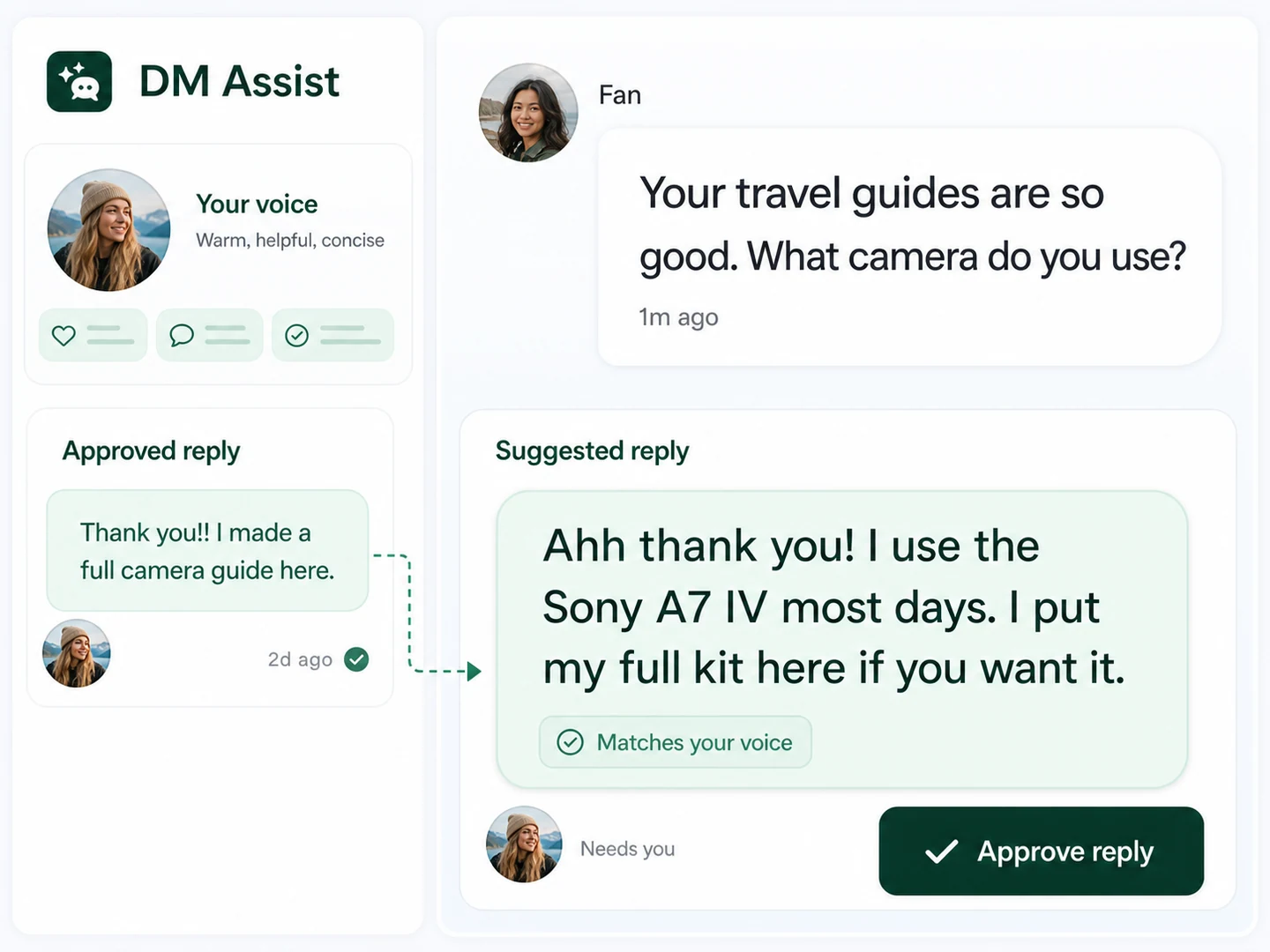
Most creators do not have a traffic problem at every stage. They have a broken handoff. A useful post produces a question, the question sits unanswered, the bio contains unrelated links, and the creator never learns which person was interested in what.
Map the six-stage path
Earn attention around one topic
A post, story, stream, or thread gives someone a reason to care.
Observe intent
A reply, comment, click, save, or DM reveals the next question.
Clarify the job
Answer from approved facts and ask only what is needed.
Match the action
Send one relevant support, gift, membership, product, or service path.
Keep the promise
Deliver on time and make support questions easy to resolve.
Remember the context
Recognize what the supporter chose without pretending to know more than they shared.
Create the public signal you want to understand
A vague lifestyle post may create attention but reveal little commercial intent. Content closer to the creator's actual offer produces clearer questions.
“New setup is finally done”
The audience may like the post, but the creator cannot tell whether interest is in the gear, process, result, or personality.
“I rebuilt my travel audio setup around three constraints”
Followers can ask about the checklist, equipment, tradeoffs, or behind-the-scenes process. Each question maps to a possible offer or guide.
This does not mean every post should sell. It means monetization content should sit close enough to a real audience problem that interest is observable.
Answer the question before sending the destination
The fastest way to make a DM feel automated is to ignore the message and paste a link. Use a three-part reply when the intent is routine and the facts are approved.
Do you share the exact warm-up routine anywhere?
Yes, the guide includes the 12-minute warm-up and the progression I use before lower-body sessions. You can find it on my creator page if you want the full checklist.
The reply does not invent availability, results, or a discount. If the guide contents or destination are not approved and current, the system should not guess.
Routine and factual
- What is included?
- Where is the official link?
- What is the current public price?
- When is the stated delivery date?
Creator judgment
- Will you make a custom version?
- Can we negotiate the price?
- Are you free for a campaign?
- What are you doing right now?
Match one intent to one destination
A bio can contain several businesses. A conversation should narrow the choice, not reopen it.
Support or gift page
Lead with one-time support, a current milestone, or a specific wishlist item.
Membership or subscription
State the current format and cadence before sharing the membership destination.
Product page
Answer what is included, delivery format, and usage rights.
Service intake
Collect scope and timing, then hand off pricing and acceptance to the creator.
Business inquiry
Request the campaign brief, budget, timeline, deliverables, and usage terms without negotiating automatically.
Retain supporter context without inventing a relationship
After someone supports, the system should know the transaction and conversation facts it is allowed to use: which offer they chose, whether delivery occurred, which issue is open, and which messages require the creator.
- Offer or gift selected
- Public price paid
- Delivery state
- Supporter-provided preference
- Previous support issue
- Emotional closeness
- Personal identity beyond provided data
- Creator availability
- Supporter's financial capacity
- Private facts from outside the conversation
This distinction makes repeat support feel organized rather than manipulative. Recognition should come from confirmed history, not from a model pretending it remembers a personal relationship.
Measure each stage with a question it can answer
| Stage | Metric | What it diagnoses | What not to conclude |
|---|---|---|---|
| Content | Relevant replies or DMs | Whether the topic creates observable intent | That every response is a buyer |
| Conversation | Resolved routine questions | Whether approved facts answer the common need | That more automation is always better |
| Routing | Destination visits by intent | Whether the link matches the question | That all clicks have equal value |
| Offer | Completed support or purchase | Whether the page and promise are clear enough | That one test predicts future demand |
| Fulfillment | Delivery issues and minutes per buyer | Whether the offer remains operationally healthy | That gross revenue equals profit |
| Relationship | Repeat action or renewal | Whether the delivered value supports continuation | That every supporter should be pushed to spend again |
Run one 30-day monetization experiment
- Week 1
Baseline the path
Choose one existing audience signal and record the relevant conversations, current destination visits, and repeated questions.
- Week 2
Clarify the offer
Publish one page with exact value, price, delivery, limits, and support terms. Prepare approved DM answers.
- Week 3
Test the handoff
Share the offer from content that naturally creates the relevant question. Answer first and route second.
- Week 4
Repair one weak stage
Change the page, reply, content signal, or fulfillment process based on the largest observed drop. Keep the rest stable.
At the end, the creator should know more than whether money arrived. They should know which content produced qualified interest, which questions blocked action, which offer was sustainable, and which conversations deserved a human.
Research notes
Sources checked for this guide
Product details and policies can change. Confirm current details with the first-party sources below.
- Google Search Central: people-first content
Useful standard for making public content satisfy a real audience job instead of producing pages only for search traffic.
- Ko-fi Help: sharing and setting up a creator page
First-party examples of common creator offers and places a support destination can be shared.
- Buy Me a Coffee Help: support, membership, and shop flows
First-party description of one-time support, memberships, products, and supporter ownership.
Questions creators ask next
Direct answers that keep the plan realistic.
What is a creator monetization funnel?
It is the path from public content to an observable audience signal, a useful conversation, the right offer or support destination, and a continued supporter relationship.
Should every creator DM contain a link?
No. Answer the question first. Share an approved destination only when it helps the person take the action they already asked about.
Can AI run the entire funnel?
AI can classify routine interest, answer approved factual questions, and point to the correct destination. The creator should retain brand deals, custom requests, payments, personal questions, safety issues, and uncertainty.
Which funnel metric matters most?
The first useful metric is the stage with the largest unexplained drop. A creator with many relevant DMs but few destination visits has a different problem from one with clicks but repeated delivery questions.
Connect public interest to the right approved offer
Loresta can classify routine questions, reply in the creator's approved tone, and preserve valuable or uncertain conversations for the creator.