

Instagram digital-product workflow
How to sell digital products through Instagram DMs without a hard sell
Use an Instagram DM to remove uncertainty, not to recreate a checkout. The reliable path is a specific product, a short answer from approved facts, one official destination, and a handoff whenever the question is not routine.
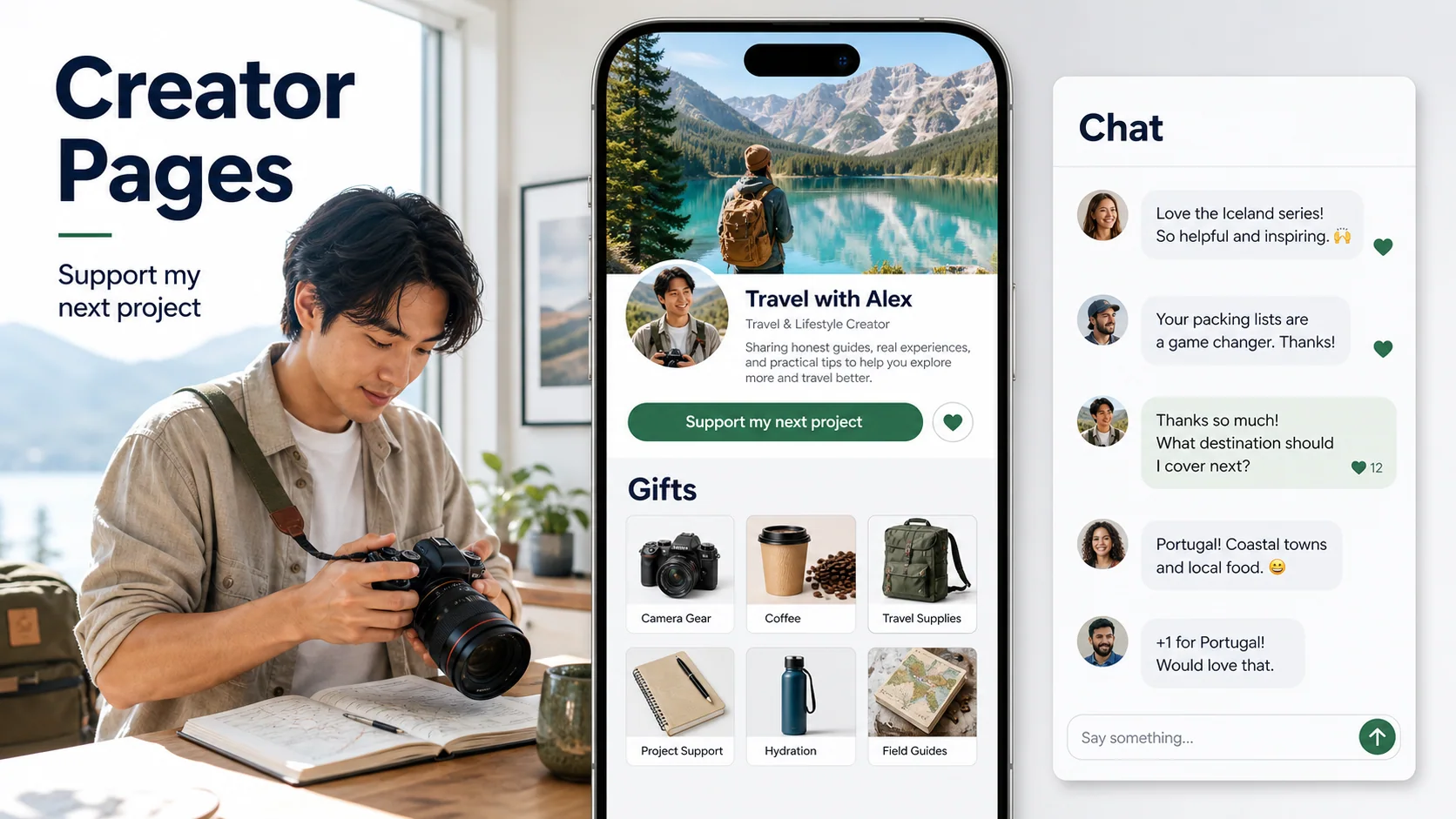
To sell a digital product through Instagram DMs, use the conversation to establish fit and the product page to complete the transaction. Publish one clearly named product with a real preview, format, contents, license, price, delivery method, and support path. In the inbox, answer the buyer's actual question, share the approved checkout only when it matches that intent, and hand off payment problems, custom work, unsafe requests, rights questions, or uncertainty. This creates a useful path without pressuring people or asking for card details in a social message.
Start with the right DM job
A DM is good at context. Someone can ask, “Is the lighting checklist included?” or “Does this work for a small restaurant shoot?” The creator can clarify the product's fit in a sentence. A checkout is good at transaction state: price, taxes or fees where applicable, payment, delivery, receipts, access, and a request path when something breaks.
Confusing those jobs creates avoidable risk. A link sent before the question is understood feels like a pitch. A payment request typed into the inbox gives the buyer less clarity and can expose information that belongs in the selling destination. A vague answer such as “Everything is in my shop” makes the person do the sorting themselves.
Use the four-state routing tree
The following tree is the original operating test for this workflow. It keeps routine product interest moving while preventing a sales assistant from guessing about a transaction or accepting work the creator has not agreed to.
Information request
The person asks what the product contains, who it is for, the format, or how delivery works. Answer from approved facts and stop when the question is answered.
Next step: explain, then offer the official product page.Purchase intent
The person says they want it, asks where to buy, or asks whether the current listing is available. Confirm the exact product and send its approved checkout destination.
Next step: one link, no invented discount or urgency.Support issue
The person reports a missing file, duplicate charge, access problem, refund request, or a payment they do not recognize. Do not diagnose from memory or request card details in the DM.
Next step: preserve context and route to the transaction owner.Custom, unsafe, or uncertain
The person requests custom work, a new license, a deadline, a personal favor, shares unsafe content, or asks for an answer not present in the product record. A polished guess is still a guess.
Next step: stop automation and hand off without promising acceptance or price.Instagram availability and controls add another gate. Meta has described labelled creator-AI replies and controls over who receives automatic responses, but its August 2026 update also says creators can no longer make new AI characters or edit existing ones in AI Studio while Meta changes the product. Treat availability, account eligibility, disclosure, and takeover controls as current facts to verify, not permanent assumptions. Loresta's official Instagram connection is still being finalized, so creators can prepare the offer record and handoff rules now without claiming that the connection is already active.
Make the digital offer answerable
Before automating any product question, write a compact offer record. The record is not marketing copy; it is the source of truth for what a routine reply may say.
| Fact to approve | What the buyer needs to know | Boundary to state |
|---|---|---|
| Outcome | What task does the product help the buyer complete? | Do not promise income, rankings, or a result the file cannot control. |
| Contents | Which files, examples, length, version, or templates are included? | Do not imply coaching, updates, or a custom review if they are not listed. |
| Format | What software, device, or skill does the buyer need? | Say when compatibility has not been verified. |
| Rights | Is use personal, client-facing, commercial, or limited in another way? | Never grant a broader license in a casual reply. |
| Delivery | Where and when does access arrive after payment? | Do not promise instant access if the destination or creator still fulfills it manually. |
| Price and policy | Where can the current amount and refund terms be confirmed? | Do not invent a sale, tax treatment, refund result, or exception. |
First-party shop guidance from Ko-fi and Patreon illustrates why the product page needs these details. Their current documentation covers names, descriptions, previews, formats, prices, delivery or access, terms, reporting, and refunds. The exact fields differ by destination, but the buyer's decision is the same: “Is this the right thing, and what happens after I pay?”
ProductRestaurant shoot planning template
IncludesEditable shot list, client brief, and one filled example in spreadsheet format
FitFor photographers planning small restaurant shoots; it is not a custom plan or portfolio critique
DeliveryDownload from the approved checkout after payment
EvidenceThe preview shows the actual fields and the listing states the current version
Build the DM-to-checkout workflow
- Capture the question.
Keep the original thread and classify what the person is trying to do. “What is inside?” and “I was charged twice” are different jobs even when they mention the same product.
- Answer the smallest useful fact.
Use the approved offer record, not a general model memory. Name the relevant inclusion or boundary and avoid adding a claim merely to sound enthusiastic.
- Point to one destination.
Share the current product page or checkout that the creator has approved. Do not stack unrelated links or substitute a marketplace listing that changes the terms.
- Close the loop.
For a routine question, stop after the useful answer. For a purchase or exception, record the handoff or conversion evidence that the destination makes available. Do not chase a person who has not asked for more.
“Yes, it is amazing. Buy here and let me know.”
The claim is unsupported, the product is unnamed, and the buyer still does not know what is included or what happens after payment.
“Yes, the restaurant version includes the editable shot list, client brief, and a filled example. It is a download rather than custom planning. The current files and checkout are here: [approved link].”
This reply answers the fit question, states the boundary, and sends one destination without promising a result or a private service.
Work through a real example
Imagine a food photographer has published a $24 planning template and receives four messages after sharing a behind-the-scenes Instagram post. The price here is a hypothetical input for the workflow, not a recommendation or forecast.
“Does this include a shot list for a 12-item menu?”
Information request. The approved record confirms the editable shot list and says the template is designed for small restaurant shoots. Answer that fact and offer the product page.
“Perfect, where can I buy the restaurant version?”
Purchase intent. Confirm the exact listing and send its one approved checkout link. Do not invent a discount, countdown, or scarcity claim.
“I bought it but the download is missing.”
Support issue. Acknowledge the problem, preserve the thread, and send the published support path or alert the owner. Do not send the file from an unverified attachment or promise a refund.
“Can you customize this for my agency and add a client presentation?”
Custom or uncertain request. Prepare a handoff with the original message, but do not quote a custom rate, promise a deadline, or imply that the creator accepted the work. Unsafe or personal content follows the same stop-and-handoff boundary.
The same product can therefore produce four different next steps. A keyword-only rule that sends the checkout link to every message would be wrong three times. The valuable automation is classification plus a bounded answer, not maximum link distribution.
Measure the handoff
Use a small ledger so the creator can tell whether the workflow is improving the buyer's path. Separate the stages instead of treating every reply as a sale.
| Measure | Question it answers | What a weak result may mean |
|---|---|---|
| Qualified product questions | Are people asking about a specific offer? | The public content or product promise may be too vague. |
| Helpful answer rate | Can the creator answer from approved facts? | The offer record needs clearer contents, fit, or boundaries. |
| Product-page clicks | Does the next step match the question? | The link may be irrelevant, duplicated, or sent before the answer. |
| Completed purchases | Did the destination report a transaction? | Review the checkout, price, product fit, and access promise; do not infer a cause from clicks alone. |
| Support and exception rate | How much judgment still belongs with the owner? | The product or automation boundary may be creating avoidable confusion. |
Do not claim that a DM caused revenue unless the available product or analytics record supports that connection. A completed purchase is stronger evidence than a click, and a refund or access complaint is evidence that the promise or delivery path needs review.
Run the launch checklist
- One offer: The product has a specific name, outcome, contents, format, and intended buyer.
- Real preview: The buyer can inspect enough of the actual files or examples to judge fit.
- Current destination: The link, price, delivery method, terms, and support path are checked before sharing.
- Rights boundary: Personal, client, commercial, editing, and redistribution permissions are not left to implication.
- Safe reply rule: Routine questions use approved facts; payment, custom, unsafe, personal, and uncertain messages hand off.
- Instagram gate: The workflow matches Meta's current account eligibility, connection access, disclosure, and takeover controls.
- Evidence: The creator can distinguish questions, clicks, purchases, support issues, and exceptions.
- Stop control: The creator can pause automated replies and update or remove the offer record.
Review the digital-product pricing guide when the unit economics are unclear, the refund-policy guide before publishing the request path, and the creator monetization funnel when the public content-to-offer handoff is weak. For Instagram-specific permissions and workflow planning, use the Instagram DM automation guide.
Choose one digital product and test whether a buyer can move from a specific question to the correct checkout without a guess, a pressure tactic, or an owner-only exception being answered automatically. If the offer record cannot support that test, improve the offer before adding more automation.
Research notes
Sources checked for this guide
Product details and policies can change. First-party pages were checked on August 30, 2026.
- Meta: creator AI controls and current availability
Meta describes labelled creator-AI replies and creator controls over automatic responses, and its August 2026 update shows why creators must recheck current Instagram availability before relying on a feature.
- Stripe Docs: hosted Checkout
Stripe documents a hosted checkout page, order summaries, one-time payments, product catalog support, and post-payment handling. These transaction records belong in checkout rather than an Instagram conversation.
- Ko-fi Help: sell digital and physical products
Ko-fi's first-party shop guidance calls for understandable names, descriptions, previews, formats, prices, terms, delivery information, and a clear contact path; digital files can be delivered through the shop after purchase.
- Patreon Help: selling one-time purchases
Patreon's current guide documents digital products, previews, supported file types, purchase access, fees, product changes, sales reporting, and refunds. Those details show why the checkout destination must carry the operational promise.
- Federal Trade Commission: advertising FAQs
FTC guidance says endorsements must reflect honest experience and that claims made in advertising need support, a useful boundary when a creator describes a digital product or recommends it in social content.
Questions creators ask next
Direct answers that keep the plan realistic.
Should I take payment inside a DM?
Usually no. A DM should clarify the product and point to the creator's approved checkout. Keeping payment, delivery, receipts, and refund handling in the selling destination gives the buyer a record and keeps card details out of the social inbox.
Can an AI assistant send a digital-product link automatically?
Only when the creator has approved the exact product, destination, and reply boundary, and the platform permits the message. It should answer routine product questions from confirmed facts. Payment problems, custom requests, personal details, and uncertainty should return to the creator.
What should a digital-product DM include?
Answer the question first, then state what the buyer receives, the format, the current price or where to verify it, and the official checkout link. Include a short boundary when the product is not custom work or does not include a license the creator has not promised.
How do I know whether DMs are helping sales?
Track qualified product questions, checkout clicks, completed purchases when the destination reports them, unanswered or handed-off questions, and refund or access issues. Do not treat total replies or follower count as proof that the workflow is working.
Give product interest one trustworthy next step
Loresta can help creators prepare approved offer facts and handoff rules now, then apply them to Instagram when official connection access is available.