

Creator offer strategy
Creator membership versus one-time support: choose the promise you can keep
Choose one-time support for a simple thank-you or defined purchase. Choose membership only when you can deliver a clear recurring benefit on a dependable schedule without turning every supporter into an unlimited personal obligation.
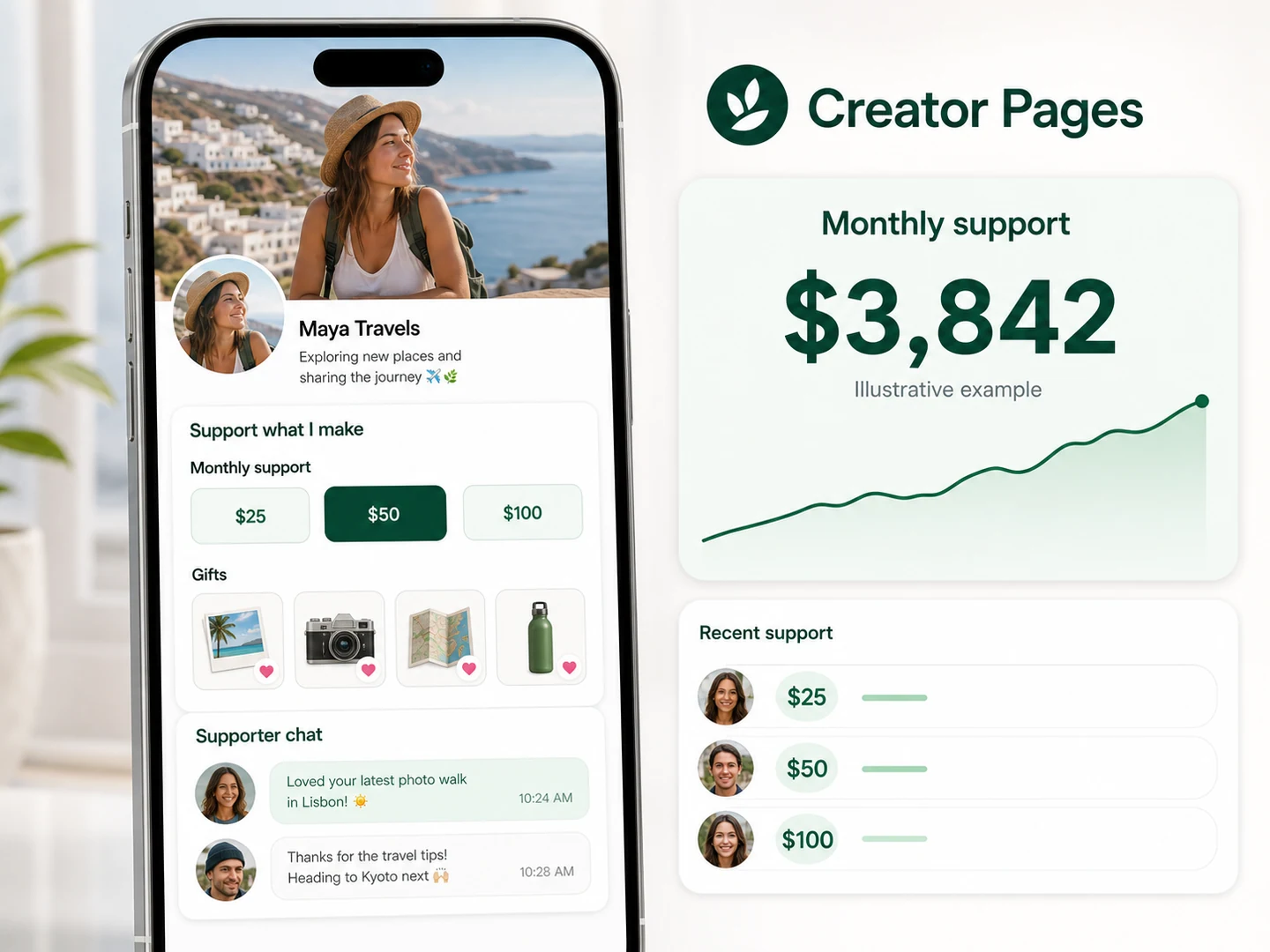
A creator should use one-time support when the supporter receives a complete outcome from one payment: a tip, a fixed digital item, a funded goal contribution, or another clearly bounded offer. A membership is better only when the creator can name the recurring benefit, delivery cadence, access method, capacity limit, and cancellation path before anyone joins. If the creator is still discovering what people value, launch one simple one-time option first. Recurring billing does not create a recurring offer; a repeatable promise does.
Choose the promise before the payment schedule
Creators often compare one payment with monthly revenue as if the decision were mainly financial. It is operational first. A one-time offer closes when the promised action is complete. A membership remains open until it is canceled, which means the creator must keep delivering, supporting access, explaining changes, and handling missed payments or exits.
One complete action
The supporter gives once or buys one defined item. The page should state what happens immediately after payment and whether anything must still be fulfilled.
One renewable promise
The member pays on a stated cadence for an ongoing benefit. The creator needs a delivery rhythm, a current benefit list, an access path, and a way to stop new sign-ups when capacity is reached.
The distinction is visible in current platform mechanics. Stripe models one-time and recurring prices separately. Patreon lets creators sell individual digital work as one-time purchases while also offering paid tiers. Ko-fi distinguishes simple monthly support from membership tiers with benefits. These are not interchangeable labels for the same offer.
Before choosing either path, use the broader creator support-page offer framework to identify what the audience is actually asking for. A payment button cannot repair an unclear promise.
Use four tests before choosing the model
Score the offer on evidence you can observe rather than on a hoped-for monthly income. The following tests separate a repeatable membership from an attractive but finite purchase.
- 01
Supporter intent
Are people asking for ongoing access, regular updates, or a community relationship? That supports membership. Are they asking to say thanks, get one file, or fund one goal? That supports one-time payment.
- 02
Natural cadence
Does useful work already appear weekly or monthly without a new production system? Membership can package a real rhythm. If delivery happens only when inspiration or inventory allows, keep it one-time.
- 03
Fulfillment capacity
Can ten more supporters receive the benefit without ten times more creator labor? Scalable content or access may fit membership. Personalized requests need limits, higher pricing, or a separate one-time workflow.
- 04
Promise durability
Would the offer still be honest during travel, illness, a quiet production month, or a platform change? If not, reduce the benefit, add a capacity boundary, or do not make it recurring.
| Audience signal | Better starting model | Reason |
|---|---|---|
| “Where can I leave a tip?” | One-time flexible support | The supporter wants a low-commitment thank-you, not a benefit schedule. |
| “Can I buy that template?” | One-time fixed offer | The value is a defined item with a completed delivery. |
| “Do you share a monthly breakdown?” | Membership candidate | The question points to recurring content with a natural cadence. |
| “Can members join your private review session?” | Capacity-limited membership | The benefit repeats, but the number of participants must match available time. |
| “Can you make a custom version?” | One-time owner-reviewed request | Scope, price, acceptance, and delivery depend on individual judgment. |
Do not count friendly comments as purchase intent. Use recurring questions, prior purchases, waitlist responses, link clicks, and completed support as stronger evidence. The creator monetization funnel shows where to measure each step without treating attention as revenue.
Build a useful one-time offer without making it vague
One-time support is simple only when the creator explains what the payment means. A flexible tip may carry no promised deliverable beyond thanks. A product, goal contribution, or service has a different fulfillment obligation. Put that distinction next to the action.
A no-perk thank-you
Let the supporter choose an amount and say clearly that the payment supports the creator's work without buying personal access or a custom deliverable.
One file or access event
Name the format, contents, delivery method, and permitted use. State whether updates are included or sold separately.
A visible purpose
Explain what the creator intends to fund, whether the contribution is refundable, and what happens if the target or deadline is not reached.
An owner-reviewed service
Use a separate intake for scope, timing, rights, price, and acceptance. A social message should not become an accidental order.
Patreon's one-time purchase documentation illustrates the cleanest version of the model: a supporter buys a specific post, digital product, or collection. The offer is easier to understand because the purchased object is named. Even a simple support payment benefits from the same clarity: “Support this month's studio costs” is more concrete than “Unlock everything.”
Use the one-time offer sentence
“Pay once to receive or fund [specific outcome]. You will get [delivery or acknowledgment] through [method] within [time], and this payment does not renew.”
If a request needs a negotiated scope or personal approval, follow the custom-request workflow. Keep a fixed offer fixed instead of using vague checkout copy to hide a private negotiation.
Build a membership you can sustain after launch week
A membership is not a list of every nice thing the creator might do. It is a small recurring service with defined boundaries. Patreon requires a price and tier description and supports structured benefits and member limits. Ko-fi recommends terms that explain inclusions, payment timing, delivery, cancellation, refunds, and benefit access. Buy Me a Coffee likewise highlights pricing relative to reward effort and the option to limit members. The shared lesson is operational clarity.
- Benefit
Name one dependable core benefit
Start with the result supporters value most, such as a monthly field note, early access window, private digest, or bounded group event.
- Cadence
State when it arrives
Use a schedule the creator can keep. “One member update by the final Friday of each month” is easier to trust and plan than “exclusive content often.”
- Access
Explain where members receive it
Identify the page, email, download area, or community destination and what a member should do if access fails.
- Boundary
Define what membership does not include
Do not imply unlimited DMs, guaranteed replies, private friendship, custom work, or permanent access unless the offer explicitly and sustainably provides it.
Start with one tier. Two nearly identical tiers create more comparison work for the supporter and more fulfillment branches for the creator. Add another tier only when it serves a different use case, such as scalable monthly content versus a genuinely limited group session.
A bounded monthly studio note
Members receive one illustrated studio note on the final Friday of each month through the member page, plus a 48-hour early-access window for new public releases. The membership does not include custom reviews or guaranteed private replies. The creator can pause new enrollment when the delivery schedule is under strain.
This promise is specific enough to answer in one message, easy to test, and less likely to expand with every new member.
When supporters ask questions in social DMs, use approved facts and one correct destination. The creator DM templates help answer value and access questions without adding pressure or unlisted perks.
Price the full delivery workload, not the optimistic member count
Recurring income is not automatically predictable income. Members can cancel, payments can fail, fees can vary, and benefits still require fulfillment. Price from the minimum sustainable promise, then treat growth as a result to measure rather than a guarantee.
Suppose one monthly member update takes four hours to create, one hour to publish and moderate, and one hour to support. If the creator values that work at $40 per hour, the offer begins with $240 of monthly labor before platform fees, processing, taxes, refunds, failed payments, or other costs. At 20 paying members, labor alone averages $12 per member. At eight members, it averages $30. The example is a planning calculation, not an earnings forecast.
Personalized benefits change the equation. A ten-minute review for every member adds more than three hours at 20 members and more than eight hours at 50. Either cap the tier, raise the price to reflect the workload, move the personal benefit to a separate one-time offer, or remove it.
What repeats every month?
Count creation, editing, posting, community moderation, access support, and member questions.
What scales per person?
Flag reviews, calls, custom files, shipping, and direct-message promises that grow with every member.
What happens when payment fails?
Know who handles retries, access changes, and supporter questions instead of treating every expected renewal as collected revenue.
What is the exit path?
Document cancellation, final access, outstanding delivery, and how changes are communicated to current members.
Use the creator platform fee comparison for current fee layers, then test Loresta's own subscription and Page-fee combinations with the pricing calculator. Compare the full operating cost, not one headline percentage.
Run a reversible 30-day launch test
The test should answer whether the offer is understood and sustainable, not whether a launch post can create a temporary spike. Use one offer, one destination, and a small number of measures.
- Week 1
Collect the language
Review audience questions and prior support. Write one offer sentence, one exclusion sentence, and one delivery promise using the words supporters already use.
- Week 2
Build and test the path
Complete a test payment, receipt, delivery, access check, cancellation path, and support response. Add an offer-specific creator refund policy, then correct anything that depends on private explanation.
- Week 3
Open a small pilot
Publish to the relevant audience and cap any time-intensive benefit. Answer questions without adding new perks in the inbox.
- Week 4
Review sustainability
Measure completed payments, delivery time, support questions, access failures, refunds, cancellations, and creator energy. Keep, simplify, pause, or replace the offer.
| Measure | What it can tell you | What it cannot prove |
|---|---|---|
| Offer-page visits | Whether interested people reached the destination | That the offer or price is understood |
| Completed payments | Whether some visitors chose the offer | Future retention or reliable monthly income |
| Questions before purchase | Which parts of the promise remain unclear | That every question represents purchase intent |
| Fulfillment minutes | Whether delivery fits the creator's capacity | Whether the work will remain enjoyable at a larger scale |
| Cancellations and refunds | Where expectations, access, or value may be misaligned | A universal reason without direct feedback |
Keep valuable and ambiguous conversations with the creator. Use the creator DM triage matrix to separate routine benefit questions from payment issues, custom requests, complaints, or personal messages.
Loresta Pages can present one-time and monthly offers with a title, price, description, status, benefit type, and fulfillment note. Loresta's inbox workflow can explain those approved details and point an interested supporter to the relevant destination. It should not add a benefit, promise a personal reply, or resolve a billing dispute. Review how the AI DM assistant works before enabling any automatic reply path.
Choose one-time support when one payment can complete the promise. Choose membership when a recurring benefit already fits the creator's real production rhythm, stays valuable at the expected capacity, and remains clear during change or cancellation. If neither offer passes that test, keep learning from audience questions before asking for payment.
Research notes
Sources checked for this guide
Product details and policies can change. First-party pages were checked on August 25, 2026.
- Patreon Help: set up paid tiers and benefits
Patreon's current first-party setup guide distinguishes the tier price and description from structured benefits, member limits, shipping details, and other delivery choices.
- Patreon Help: selling one-time purchases
Patreon documents one-time sales for posts, digital products, and collections, showing that recurring access and individual purchases can serve different jobs.
- Ko-fi Help: memberships and membership tiers
Ko-fi's first-party guide covers tier descriptions, benefits, welcome messages, capacity limits, payment timing, delivery terms, cancellations, and overdue payments.
- Buy Me a Coffee Help: getting started with memberships
Buy Me a Coffee advises creators to match price to reward effort, explains member limits and billing, and recommends beginning with one membership level.
- Stripe Docs: how products and prices work
Stripe distinguishes one-time from recurring prices and explains why distinct products and billing variants should be modeled clearly at checkout and on receipts.
Questions creators ask next
Direct answers that keep the plan realistic.
Should a new creator start with a membership or one-time support?
Start with one-time support when the audience mainly wants a simple way to say thanks or buy a defined item. Start with one membership only when the creator already produces something useful on a reliable cadence and can explain the recurring benefit in one sentence.
Can a creator offer one-time support and a membership together?
Yes. Keep the choices distinct: one-time support is a completed action with no renewal, while membership is an ongoing promise with a stated billing cadence, benefits, access path, and cancellation process.
How many membership tiers should a creator launch?
One is usually enough for a first test. Add a second only when it serves a genuinely different supporter need and the creator can fulfill both without duplicating or confusing benefits.
What makes a good recurring creator benefit?
A strong recurring benefit comes from work the creator already does reliably, such as one monthly behind-the-scenes update, early access, a digest, or a bounded community session. Avoid unlimited access, guaranteed personal replies, and benefits that depend on constant availability.
How should a creator price a membership?
Estimate monthly creation, moderation, delivery, support, refund, and administration time first. Add platform and processing costs, then divide the sustainable monthly workload across a conservative member count. Do not set the price from another creator's tier alone.
Can an AI assistant sell memberships in creator DMs?
An assistant can answer routine questions from approved facts and point an interested fan to the correct page. It should not invent benefits, imply personal access, promise availability, handle payment disputes, or pressure someone into a recurring charge.
Put one clear offer in front of interested supporters
Loresta Pages support one-time and monthly offers, while approved inbox replies can explain the current option without inventing perks or personal access.