

Custom request operations
How to handle custom requests from fans without overpromising
Treat a custom request as a small service business: define the deliverable, decide what belongs in a private intake, and keep acceptance, pricing, and sensitive conversations with the creator.
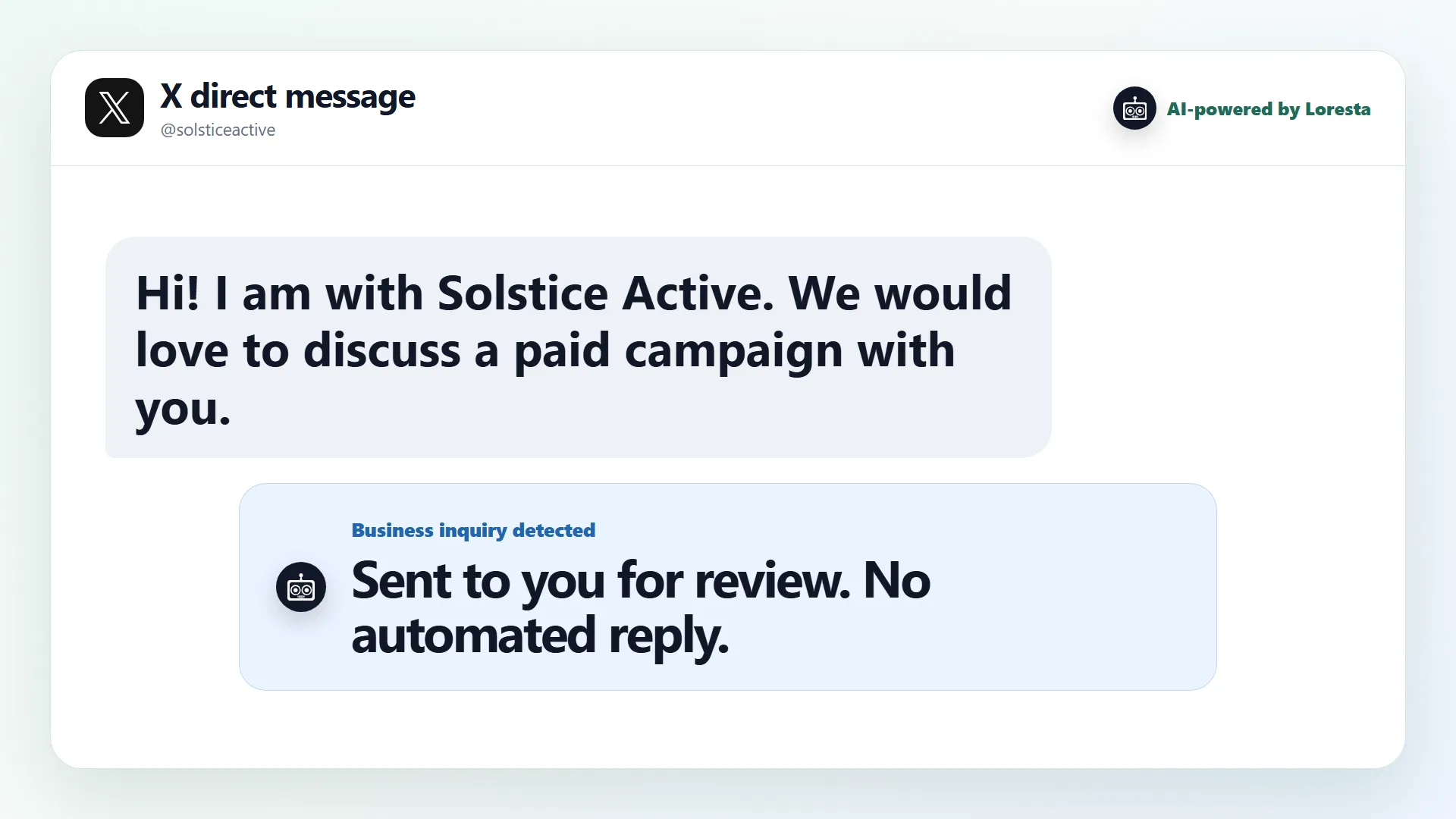
The safest way to handle a custom fan request is to pause before promising anything. First decide whether the request fits one clearly described offer. Then capture the minimum brief: what the person wants, the format, timing, revisions, intended use, and any boundaries. The creator or an authorized manager should confirm scope, price, availability, payment path, and acceptance. An AI assistant can recognize the request and prepare a handoff, but it should not negotiate, quote an unapproved price, collect sensitive information, or imply that the work is accepted.
Use the offer-ready test
A custom request is ready for a listing or intake form only when the creator can answer five questions without improvising:
- What
What exactly is delivered?
Name the output, format, length, quality level, and whether the buyer receives a draft, final file, session, message, or physical item.
- When
When can it be delivered?
Use a realistic turnaround range and state what happens if the creator becomes unavailable. Do not promise a date before checking capacity.
- How
How is the work requested and paid for?
Choose one approved intake and checkout path. Keep the social DM for clarification, not for card details or an informal contract.
- What not
What will not be accepted?
List excluded topics, rights, formats, deadlines, personal access, and requests that the creator cannot safely or legally fulfill.
If those answers are still changing from one fan to the next, the offer is not ready. Point the person to a general creator support page or a waitlist instead of selling an undefined promise.
Turn a vague DM into a useful request brief
“Can you make one for me?” is interest, not a complete order. The next step is a short brief that lets the creator judge fit without asking for unnecessary personal information. Use the same fields every time so the creator can compare requests and spot a recurring offer.
| Field | What to capture | Why it matters |
|---|---|---|
| Request | The outcome the fan wants, in their own words | Prevents a vague request from becoming an accidental promise |
| Format | File type, length, delivery method, or session format | Defines the work unit and the expected handoff |
| Timing | Preferred date, flexibility, and any event deadline | Shows whether the request fits current capacity |
| Reference | One example, theme, or approved input | Reduces revisions without requesting a full personal history |
| Intended use | Personal use, gift, publication, business, or promotion | Changes rights, attribution, disclosure, and price questions |
| Constraints | Topics, formats, or requirements the creator cannot accept | Lets the creator decline early and consistently |
A brief is not permission to collect everything a fan may reveal. X's automation rules say to request only the minimum information needed and to explain how private information will be used. That is a good operational rule on any social channel: ask for the job, not a biography.
Example: convert the request before discussing price
Could you make a custom video for my friend next Friday?
Thanks for checking. I review custom video requests through the intake form so I can confirm the format, timing, and current availability. Please do not send payment or private details here. I will confirm whether this fits before anything is accepted.
The response does not promise that the creator is available, quote a price, or ask the fan to send a card number. It gives one next step and preserves the creator's right to review.
Define the offer before opening the inbox
Creators often think a custom offer is just a price attached to a request. In practice, the price is only one line in a small service agreement. Ko-fi's first-party commission guidance highlights listings, terms, available slots, and order management because each one prevents a different failure.
One repeatable output
Describe what is included and the maximum length, number of subjects, or number of revisions. “Custom” should not mean unlimited.
A visible number of slots
Set a weekly or monthly limit. Close the listing when the creator cannot meet the stated turnaround without rushing existing buyers.
State how the result may be used
Separate personal use from public posting, resale, advertising, brand work, or training. Ask a qualified professional when local law or licensing is unclear.
Make revisions finite
State what counts as a revision, what is a new request, and how the creator handles a change that arrives after approval.
Price the work that happens after the request
Estimate the time for clarifying the brief, preparing the work, revising it, delivering it, and answering follow-up questions. Include platform and payment costs, taxes where applicable, refunds, and the time the creator spends on requests that are declined. Patreon notes that platform, processing, payout, and other fees can vary by plan, location, payment method, and currency; a headline price is not the same as take-home income.
Do not promise a result the creator cannot substantiate. If a custom service includes a performance, transformation, expert opinion, or brand endorsement, describe the deliverable rather than implying guaranteed results. The FTC's guidance is a useful check: qualifying information should be clear and close to the claim it qualifies.
“You receive one 60-second landscape video delivered within seven days, with one factual correction included; it is for personal use and does not include public posting, paid promotion, or unlimited revisions.” If the creator cannot write a sentence this concrete, the offer needs more work.
Keep payment and private details out of casual DMs
A social message is a poor place to improvise a checkout flow. Move payment to the approved destination once the creator confirms that the request is accepted. Stripe's Connect documentation shows that the charge model affects how funds are split, whose account is charged for refunds and chargebacks, and what the customer sees on a receipt. Decide who owns those responsibilities before publishing the offer.
Ask only for information necessary to scope or fulfill the work. A creator may need a preferred name, an output format, or a reference file. They may not need a home address, identity document, account password, payment-card number, private relationship history, or unrelated personal details. Use the creator's privacy notice and the checkout provider's current policy to explain what is collected, why, and how support questions are handled.
Intent and next step
What the fan wants, the relevant listing, a safe clarification, and the fact that the creator is reviewing availability.
Transaction and fulfillment details
Payment, billing, delivery address, private reference files, order status, refund questions, and any sensitive information needed for the service.
For physical goods or services that require an address, explain who receives it and why. For digital delivery, do not collect an address simply because a platform form offers one. A narrow data path is easier to secure, explain, and delete.
Build an inbox workflow that knows when not to answer
Custom requests are a high-value handoff category. They often look friendly and routine, but accepting one can create a deadline, payment obligation, rights question, or personal boundary. The DM priority guide can help place them beside brand, payment, safety, and other owner-only conversations.
Explain an existing offer
Answer from approved facts: what the listing includes, where the current intake is, and whether listed slots are open.
Prepare an owner handoff
Preserve the original thread, classify the request, and show the brief fields without accepting the job or quoting an unapproved rate.
Route to the transaction owner
Do not troubleshoot a charge, promise a refund, or request card details through an automated social reply.
Stop the automated conversation
Protect the creator and fan with a clear owner alert. The creator decides whether and how to respond.
X's current automation rules require clear user intent before automated DMs, an easy opt-out, and thoughtful treatment of private information. Instagram's creator-AI guidance likewise makes the AI label and creator visibility part of the user experience and warns that replies may be inaccurate. These are practical reminders to keep automation narrow, visible, and interruptible.
Loresta can help with classification, approved factual answers, and owner handoffs. It should not turn a custom request into an automatic contract. Review the high-volume inbox playbook, set a response mode, and keep an explicit pause path before adding a new request category.
Use a four-state request ledger
- New
Intent detected
Store the original message, creator profile, date, and request category. No acceptance has occurred.
- Review
Brief is being checked
The creator confirms fit, availability, rights, price, and the correct private intake or checkout path.
- Accepted
Payment and delivery are defined
Keep the order or agreement in the approved system and attach the stated deliverable and deadline.
- Closed
Delivered, declined, or refunded
Record the outcome, unresolved issue, and any change needed before opening another slot.
Launch one request type before expanding
Use a small pilot that can teach the creator something without putting a large queue at risk. A seven-day setup is enough to test the promise; the delivery window may be longer.
- Day 1
Choose one job
Pick a request with a repeatable output, a known audience need, and a format the creator already knows how to deliver.
- Day 2
Write the terms
Set scope, price, turnaround, revisions, rights, exclusions, capacity, payment, and refund language. Ask for professional advice where required.
- Days 3 to 4
Test the path
Run one test from DM to intake to payment to delivery. Check what the fan sees, which records are created, and where a creator can pause.
- Days 5 to 7
Open a small number of slots
Track clarification time, accepted requests, declined requests, revisions, delivery time, support questions, refunds, and creator energy.
Use the DM workload calculator for the routine inbox estimate, but evaluate custom work with service metrics: minutes per delivered request, revision rate, on-time delivery, unresolved support, and the percentage of requests that did not fit. If custom work creates more exceptions than value, close the slots and keep the offer as a clear future option rather than forcing automation to rescue it.
Expand only when the creator can deliver the current request type on time, explain the terms without a private negotiation, and hand off exceptions without losing context. More slots are not progress if the promise becomes less reliable.
Custom work can be a useful part of a creator's monetization plan, but it is not the only path. A digital guide, support option, membership, or fixed product may preserve the same audience interest with less scheduling and personal exposure. Give fans a specific next step while keeping the creator's judgment where it belongs.
Research notes
Sources checked for this guide
Product details and policies can change. First-party pages were checked on August 23, 2026.
- Ko-fi Help: what are Ko-fi Commissions?
First-party guidance describes custom work and services, and calls out listings, terms, available slots, and order management as creator-controlled parts of a commission workflow.
- Stripe Connect: accept a payment
Stripe explains how charge type affects fund flows, receipts, refunds, and chargebacks when a platform handles payments for connected sellers or service providers.
- X Help: automation development rules
X requires clear user intent before automated DMs, an easy opt-out, thoughtful handling of private information, and minimum necessary data collection.
- Instagram Help: chat with an AI based on a creator
Instagram explains that creator AI replies are labelled, visible to the creator, interruptible by the creator, and potentially inaccurate, which is a useful boundary for creator-facing automation.
- Patreon Help: creator fees FAQ
Patreon lists platform, processing, payout, and other fee layers that can vary by plan, location, payment method, and currency when creators sell memberships or one-time purchases.
- Federal Trade Commission: advertising FAQs
FTC guidance says qualifications and disclosures should be clear and close to the relevant claim, a useful standard when a custom offer includes results, sponsorship, or promotional language.
Questions creators ask next
Direct answers that keep the plan realistic.
Should creators accept custom requests from fans?
Only when the creator can describe the deliverable, price, timeline, revisions, usage rights, and boundaries clearly and can fulfill the work without making an unsustainable promise. A simple support or digital offer may be a better first step.
Can an AI assistant negotiate a custom request?
No. An assistant can identify likely custom intent, capture the thread, and show an approved intake prompt. Scope, price, availability, personal details, rights, refunds, and acceptance should stay with the creator or an authorized manager.
What should a creator include in a custom commission listing?
State what the buyer receives, the format, turnaround range, revision policy, price or starting price, accepted topics, excluded requests, usage rights, cancellation or refund terms, and the next step for submitting details.
Should fans send private details in a social DM?
Ask only for information needed to evaluate or deliver the request, and move payment, identity, address, or other sensitive details to the approved checkout or intake channel. Never ask for passwords, card numbers, or unnecessary personal information in a DM.
How many custom request types should a creator offer?
Start with one repeatable request type and a small capacity. Add another only after the creator has measured delivery time, revisions, support questions, and whether the existing offer remains enjoyable and profitable to fulfill.
Give custom work a clear owner and a clear limit
Loresta can surface likely custom intent, preserve the thread, and keep routine questions moving while the creator decides what to accept.