
Classify
Detect sponsorship, campaign, affiliate, licensing, or collaboration intent.

Brand inquiry intake playbook
The first job is not to negotiate automatically. It is to recognize a real business inquiry, preserve the message, and collect enough context for the creator to decide.
Built from product rules for approved facts, platform permissions, conservative handoffs, and creator-controlled automation.
A brand message may mention sponsorship, paid partnership, campaign, deliverables, licensing, affiliate terms, event attendance, product seeding, or a creator brief. It may arrive from a brand employee, agency, marketplace, or unfamiliar account.
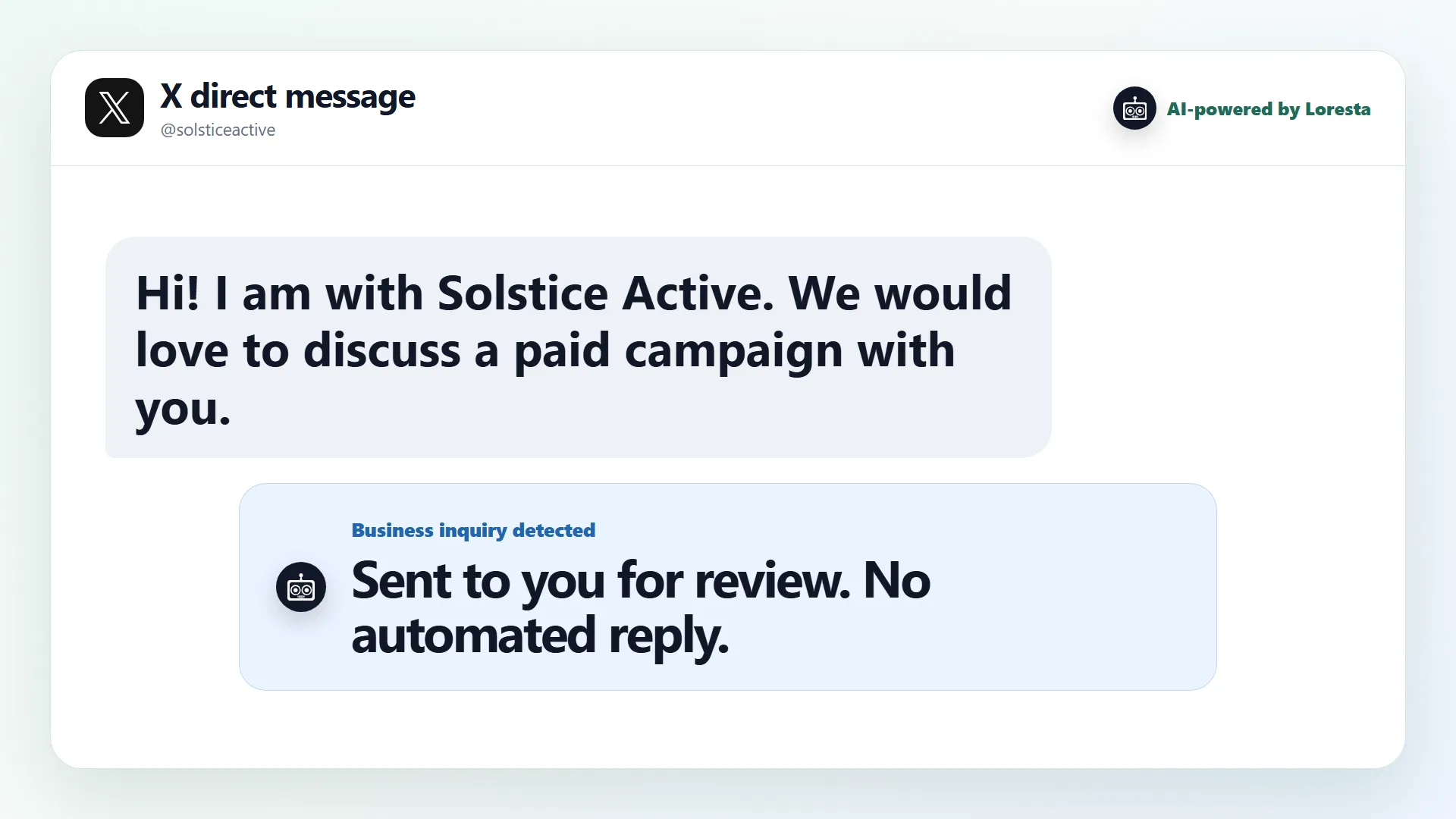
Classify the intent as business even when details are incomplete. Do not let a generic fan-reply rule send an official destination or playful answer to a collaboration inquiry. Loresta routes detected collaborations to the creator without an automatic reply.
The creator needs the company or agency name, sender identity, campaign goal, requested deliverables, timing, budget or compensation structure, and requested usage rights. Preserve any contact email, linked brief, and the original account handle.
Do not ask for tax documents, passwords, payment credentials, identity scans, or a home address through an automated social DM. Move legitimate opportunities to the creator's approved business channel before exchanging contracts or sensitive information.
Review the account history, brand domain, sender email domain, public employee information, spelling of links, and whether the campaign matches the creator. Be cautious with shortened links, file downloads, urgent payment requests, gift-card language, account-verification claims, or requests to install software.
A message can be a real inquiry and still be a poor fit. Separate scam screening from commercial evaluation. Record why the message was rejected so repeated sender patterns can be blocked without teaching automation to reject every new brand.
Rates, exclusivity, licensing, whitelisting, deadlines, revisions, payment timing, category conflicts, and creator availability require judgment. An automated assistant should not quote a price, accept deliverables, promise a date, or imply the creator is interested.
The safest default is no automatic response and an immediate owner alert. If the creator approves an acknowledgment template, keep it neutral: thank the sender, confirm the inquiry reached the business channel, and state when the creator or manager will review it. Do not invent a response time.
Use states such as new, verifying, needs creator review, moved to email, declined, and active discussion. Attach the original DM, sender, date, next owner action, and any approved follow-up date.
Review unresolved opportunities separately from routine inbox volume. The brand deal inbox assistant page explains Loresta's product boundary, while the DM priority matrix shows where business messages sit in the full queue.
Preserve the opportunity
Loresta identifies business intent and leaves negotiation, pricing, deliverables, and acceptance to the creator or authorized manager.
Move from classification to verification before any commercial response is approved.
Detect sponsorship, campaign, affiliate, licensing, or collaboration intent.
Keep the sender, original message, linked context, and requested timing.
Check identity, domain, links, fit, and obvious scam signals.
Let the creator or manager decide the channel, response, rate, and next step.
A useful alert should answer these questions without making a commercial promise.
Direct answers for creators and operators comparing DM automation.
First verify the sender and campaign, capture deliverables, timing, compensation, and usage rights, then move legitimate opportunities to the creator's approved business channel.
Loresta should not negotiate rates, deliverables, licensing, exclusivity, deadlines, or acceptance. Those decisions belong to the creator or authorized manager.
A useful inquiry identifies the company, campaign, requested deliverables, schedule, compensation structure, usage rights, and a verifiable business contact.
Watch for mismatched domains, urgent payment requests, gift cards, suspicious downloads, account-verification claims, shortened links, and requests for passwords or recovery codes.
No. A generic acknowledgment can create expectations or confirm an unsafe sender reached the creator. A no-send alert is the safer default unless the creator approves a neutral business template.
Loresta alerts creators when a DM looks commercial and leaves rates, rights, deliverables, and acceptance in human hands.