

Creator brand deal pricing
How much should a creator charge for a brand deal?
Build a quote from the work, rights, risk, and evidence in the brief instead of copying a follower-count formula.
A creator should charge for a brand deal by pricing the complete promise, not by multiplying followers by a made-up rate. Start with the deliverables and the time required to plan, make, revise, publish, report, and support them. Add production expenses, risk, a contingency, and the value of rights the brand receives. Then check audience fit and recent performance evidence. Price paid amplification, creator-handle advertising, broad licensing, category exclusivity, rush work, travel, and extra revisions as separate scope. A small, well-defined deal can be worth accepting; a large-looking fee can still be unprofitable when the brand receives unlimited rights and the creator owns every hidden task.
This is a commercial planning framework, not legal, tax, or accounting advice. Advertising disclosures, contracts, taxes, intellectual-property rights, and platform rules depend on the creator, brand, audience, jurisdiction, and format. Have a qualified adviser review unusual or high-value work.
Define what the brand is buying
Before naming a price, turn the brand's message into a brief. “One Instagram post” can mean a concept, a shoot, editing, a caption, a story sequence, comment support, an approval round, a link, a performance report, and permission to run the content as an ad. Those are not one unit of work. Ask which channel, format, quantity, deadline, approval path, talking points, claims, links, music, talent, and brand assets are involved.
| Brief element | Questions to answer | Why the quote changes |
|---|---|---|
| Deliverable | How many posts, videos, stories, lives, links, or stills? Which platform and format? | Each asset has its own planning, production, publishing, and support time. |
| Production | Who supplies the concept, script, product, location, props, editing, captions, and music? | Creator-owned production adds labor and out-of-pocket cost that a posting fee does not cover. |
| Approval | How many review rounds, stakeholders, factual claims, and reshoots are expected? | Open-ended feedback is an uncapped revision liability. |
| Usage | Can the brand repost, edit, boost, whitelist, license, or use the content in paid media? | More distribution and control create more value and restrict future use. |
| Exclusivity | Which competing categories are restricted, for how long, and on which channels? | Exclusivity removes other opportunities and should have a defined term and price. |
| Commercial terms | What is the payment schedule, cancellation rule, late-delivery treatment, and reporting requirement? | Cash timing and cancellation risk affect the deal's real economics. |
Separate a brand's creative request from its distribution request. A creator may agree to make a video for the creator's own channel without agreeing that the brand can run that video as an advertisement forever. YouTube's Creator Partnerships guidance shows why a media kit and desired rates are useful inputs, but a platform feature does not replace a deal-specific agreement.
Calculate a sustainable price floor
Your floor is the lowest price that makes the defined work worthwhile after real costs and risk. It is not necessarily the final quote. Write down the work before estimating the hours: brief review, concepting, research, filming, styling, editing, copy, communication, revisions, posting, moderation, analytics, invoicing, and recordkeeping. Include travel, equipment rental, contractors, props, samples, software, and other expenses the campaign creates.
- 01
Estimate every work block
Use a normal-case estimate and identify a high-case estimate for approvals, reshoots, or support. Do not hide communication because it happens in a DM.
- 02
Apply a target working rate
Choose a rate that reflects the creator's business costs, experience, taxes, non-billable time, and the scarcity of the requested deadline.
- 03
Add out-of-pocket costs
List travel, materials, editing, assistants, location, music licensing, shipping, and any required purchase separately where that keeps reimbursement clear.
- 04
Protect the downside
Account for late payment, cancellation after work begins, extra review rounds, reshoots, and a deadline that displaces another paid commitment.
A short video is not a one-hour job
Assume a creator estimates 2 hours for the brief and concept, 3 hours for filming, 4 hours for editing and captions, 1 hour for one approval round, 1 hour for publishing and reporting, and $75 in direct expenses. At a hypothetical $60 working rate, the labor is $660 and the direct cost is $75, so the floor before rights, exclusivity, tax planning, and contingency is $735. This is an illustration, not a market quote. If the brand later asks for six months of paid usage or a category restriction, the original floor has not become a fair final price simply because the deliverable list still says “one video.”
Keep your floor private unless sharing it helps the negotiation. The brand needs the scope and quote, not a demand to audit your personal finances. If the requested budget is below the floor, reduce the work, rights, deadline, or revision count. A lower price for the same unlimited promise is not a discount; it is a different margin.
Add audience fit and campaign value
After the floor, evaluate why this creator is a useful match for the campaign. A smaller audience with strong relevance may be more valuable to the brief than a larger but unrelated audience. Review recent comparable content, not only the best-performing post. Useful evidence can include typical views, watch time, saves, replies, link clicks, audience geography, audience age where available, and the quality of previous campaign reporting.
Does the audience have a reason to care?
Explain the connection between the creator's subject, the product, and the people who follow the account. Relevance is a reason to price confidently, not a reason to invent results.
What does a normal post do?
Use a recent range or median where the platform provides it. Label the period, format, and metric so a single outlier does not become a promise.
What creative labor is hard to replace?
A creator's voice, production quality, community relationship, and ability to explain a product can be part of the value beyond raw impressions.
What does this campaign prevent?
Consider category conflicts, a blocked launch window, travel, or the capacity the creator cannot use for another client or their own work.
Do not promise sales, reach, engagement, or a return on ad spend unless the contract has a carefully defined measurement and the creator can support the claim. The FTC's advertising guidance says claims should be truthful and supportable, and disclosures should sit close to the claims they qualify. A creator can describe past performance accurately without guaranteeing that the brand will receive the same outcome.
For a new creator with limited campaign history, use a bounded test: one channel, one or two assets, a defined reporting window, and no implied guarantee. A pilot gives both sides evidence for a later quote. It should not give the brand a permanent discount or unlimited rights in exchange for “exposure.”
Price usage, exclusivity, and rush work separately
Usage is often the largest hidden part of a brand deal. The brand may want to publish the creator's asset on its own channels, edit it into an advertisement, run it from the creator's handle, use it on a website, or keep it in a library indefinitely. Each use changes the value and the creator's control. State the channels, territory, duration, edits, paid spend, and end date in plain language.
Brand-owned social channels
Define which accounts may repost, whether the original caption must remain, whether edits are allowed, and how long the permission lasts.
Ads using the creator's asset
Price media usage for a defined term, platform, territory, and version. Do not treat an ad buy as included merely because the brand supplied the product.
Advertising through the creator account
Confirm the platform's authorization flow, campaign duration, account access, creative control, and stop conditions before agreeing.
Restriction on competing work
Name the category narrowly and set the start and end dates. A broad indefinite restriction can remove more value than the campaign pays for.
Music, location, talent, and third-party intellectual-property rights deserve their own check. Instagram's first-party help explains that branded content can include gifted products and affiliate relationships, while Meta's music library has commercial-use limits. Do not promise the brand unrestricted ad use when the creator's music or other assets are licensed only for an organic post.
Charge for speed when the deadline requires displaced work, overnight production, or an unusually compressed approval cycle. Charge for complexity when the creator must coordinate a launch, travel, multiple formats, or a legal review. These are not penalties; they make the quote describe the actual operating conditions.
Build a quote the brand can approve
A concise quote is easier to approve when it has one primary package and a short add-on list. Avoid presenting ten interchangeable options before the brand has explained the campaign. Start with the best-fit scope, then offer a smaller pilot if the budget does not support it.
Package“One [format] on [channel], published between [dates], including concept, production, caption, one consolidated approval round, and a [duration] organic repost license on the brand's owned [channels].”
Evidence“Recent comparable posts reached [range or median] [metric] during [period]. This is context for fit, not a guaranteed campaign result.”
Included“The quote includes [hours or production boundary], [number] revision round, creator disclosure, and a basic performance report delivered [time] after publication.”
Separate“Paid media, creator-handle advertising, additional edits, rush delivery, travel, category exclusivity, and extended licensing are available at an additional fee after the scope is confirmed.”
| Scenario | Illustrative package | Boundary to keep visible |
|---|---|---|
| Small pilot | One short-form video, one approval round, organic posting, 30-day brand repost | No paid amplification, no category exclusivity, no reshoot after approved concept |
| Launch bundle | One video, three story frames, tracked link, report, and two approval rounds | Story timing, link destination, claim approval, and reporting window are defined |
| Licensed campaign | Creator-made asset plus a separately priced 90-day paid-media license | Channels, territory, spend period, edits, account authorization, and takedown terms are written |
The numbers in this table are scope examples, not recommended market rates. Insert a price only after your floor and the rights calculation are complete. If the brand wants a lower total, show what leaves the package: fewer assets, fewer revisions, shorter usage, no exclusivity, a slower timeline, or a smaller reporting requirement.
Negotiate from a written brief, not a rushed DM
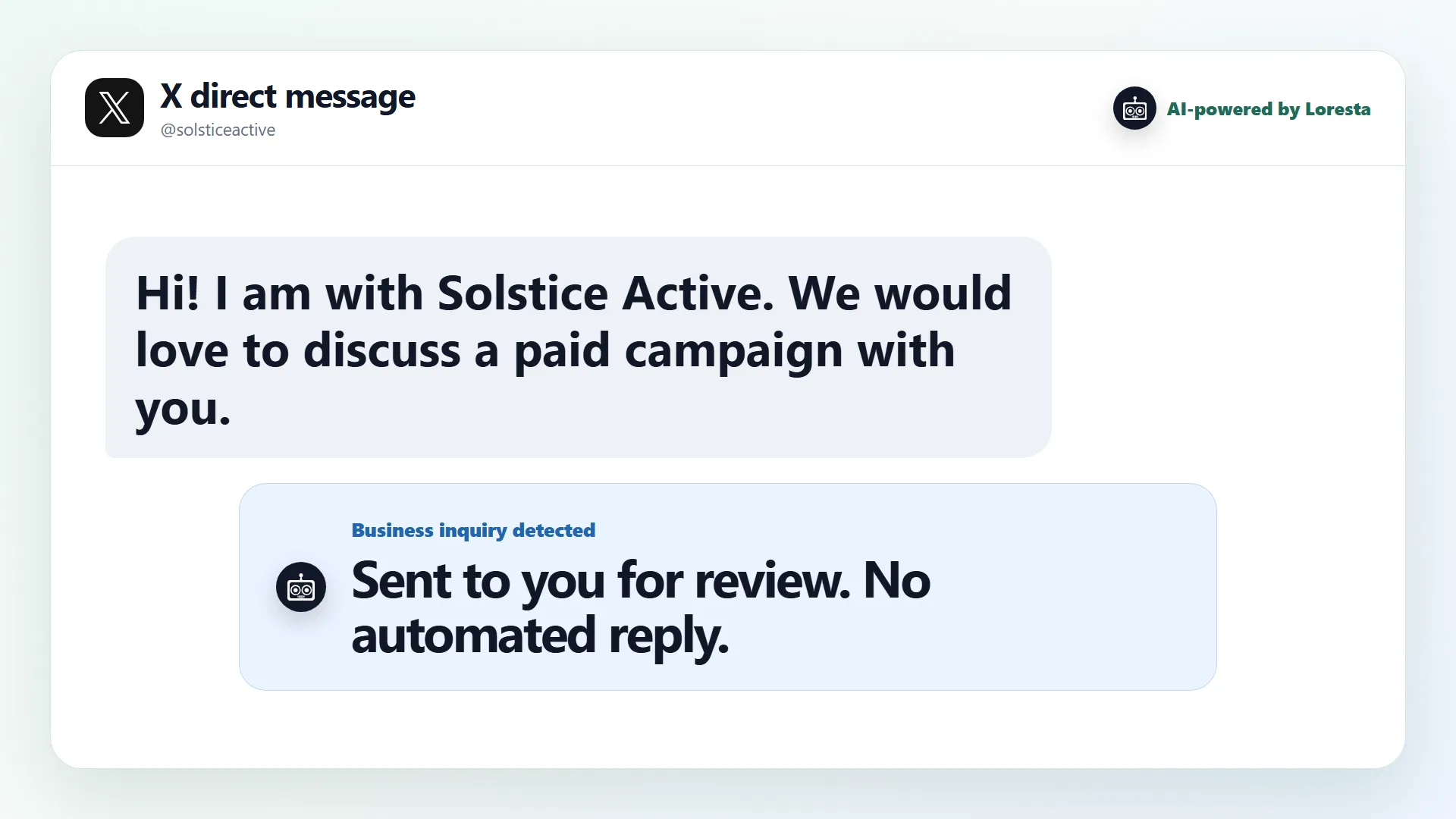
A commercial inquiry deserves a human review because a friendly sentence can hide a binding expectation. Ask for the brand, product, campaign goal, requested deliverables, channels, timeline, budget range, usage, exclusivity, approval process, required claims, payment terms, and contact details. Verify the sender and keep suspicious links or attachments out of the creator account.
Capture the opportunity
Save the original inquiry, sender, brand, product, requested date, and the exact question. Do not let the thread disappear into a generic inbox label.
Check fit and risk
Confirm audience relevance, claims, rights, category conflict, product safety, disclosure, capacity, and whether the offer is appropriate for the creator.
Return a scoped package
Send the package, assumptions, add-ons, timeline, and next step. Do not accept “we will decide the usage later.”
Confirm before work begins
Get the final deliverables, rights, payment, cancellation, approval, disclosure, and contact owner in writing before producing the asset.
A safe holding reply can say: “Thanks for reaching out. Please send the campaign brief, deliverables, timeline, usage, exclusivity, budget range, and payment terms to [approved business contact]. I review scope and fit before confirming availability.” The message keeps the opportunity moving without quoting a rate or promising a result.
Loresta can surface likely collaboration intent and preserve the conversation for owner review, but it should not negotiate rates, accept terms, promise deliverables, or answer uncertain commercial questions automatically. The brand-deal inbox guide and collaboration handoff guide explain that boundary. Routine questions elsewhere in the inbox can continue under their own approved rules.
Protect disclosure, rights, and delivery
A price is not a complete brand-deal plan. The FTC says a material connection can include payment, employment, family relationships, or anything of value such as free or discounted products. The disclosure belongs with the endorsement and must be easy to notice and understand. YouTube requires creators to report paid promotions through its platform workflow, and Instagram says branded content using payment, gifts, or affiliate compensation requires the paid partnership label. Check the current rules for every channel and audience.
- Claims: Use only product claims the brand can substantiate and the creator can honestly support from personal experience.
- Disclosure: Put a clear disclosure with the endorsement in the format and location viewers will actually see.
- Rights: Name organic reposting, paid media, creator-handle ads, editing, territory, duration, and takedown.
- Payment: Set currency, invoice or payout steps, deposit if appropriate, due date, late payment, and tax paperwork responsibilities.
- Approval: Define one decision-maker, one consolidated feedback path, revision count, and what happens when feedback arrives late.
- Cancellation: State the fee for work completed, production costs, reserved dates, and any non-refundable commitments.
- Records: Keep the brief, final agreement, approved claims, disclosure proof, asset versions, invoice, payment, and report.
For recurring or high-value work, have a lawyer or qualified business adviser review the agreement. A creator should understand what they are licensing, whether the brand can edit or reuse their likeness, who owns raw files, how disputes are handled, and whether the agreement restricts future work. If those facts are missing, the correct next step is clarification, not an automatic reply.
Accept the deal when the offer clears the creator's floor, the audience and product fit are credible, the rights and timeline are priced, the claims and disclosure are supportable, and the agreement leaves the creator able to deliver the promise. If one of those conditions is unknown, pause and ask for the missing fact.
Research notes
Sources checked for this guide
Product details and policies can change. First-party pages were checked on August 29, 2026.
- Federal Trade Commission: Disclosures 101 for Social Media Influencers
The FTC explains when a material connection exists, why free or discounted products can count, and why disclosures should be clear, hard to miss, and placed with the endorsement.
- Federal Trade Commission: Advertising FAQs for Small Business
The FTC says advertising claims must be truthful and supportable, and that qualifying information should be clear and close to the claim it qualifies.
- YouTube Help: Get started with YouTube Creator Partnerships
YouTube describes Creator Partnerships features including customizable media kits, brand inquiries, business contacts, and creator-set desired rates where the feature is available.
- YouTube Help: Paid product placements, sponsorships, and endorsements
YouTube defines paid promotions and explains that creators must disclose them in the platform workflow, with additional legal and policy obligations.
- Instagram Help: What is considered branded content
Instagram's first-party guidance treats payment, gifted products, and affiliate relationships as exchanges of value that require the paid partnership label for branded content.
- X Rules: Automation
X's automation rules are a reminder that automated messages must respect platform rules and user intent. A commercial inquiry should remain an owner-reviewed conversation, not an unsolicited or automatic negotiation.
Questions creators ask next
Direct answers that keep the plan realistic.
How much should a creator charge for a brand deal?
There is no universal rate. Start with the time, production cost, revisions, risk, usage rights, exclusivity, and deadline in the actual brief. Then use audience fit and reliable performance evidence to decide whether the quote reflects the value and opportunity cost. Present a package price and separate add-ons instead of copying a follower-count formula.
Should creators charge by follower count or views?
Neither metric is enough by itself. Followers describe potential reach, while recent relevant views, watch time, saves, replies, clicks, audience location, and conversion evidence may explain fit more usefully. Use the metrics the brand can reasonably verify and never guarantee a result that the data cannot support.
Should usage rights be included in a sponsored-post price?
Only if the scope is deliberately limited. Organic posting, brand reposting, paid media, creator-handle advertising, duration, territory, edits, and category exclusivity create different rights. Name each one, set a time limit where possible, and price paid amplification or broad licensing separately.
What if a brand offers free products instead of payment?
Treat the product, service, discount, travel, or other benefit as compensation that can create disclosure and tax questions. Decide whether the item is worth the production time and opportunity cost, and do not accept a vague promise in place of a written scope. The FTC says a material connection can exist even when the creator receives something other than cash.
Can a creator negotiate a brand deal in DMs?
A DM can be a useful intake path, but a creator or authorized manager should review the brief, rights, payment terms, claims, and deadlines before accepting. Keep routine inbox assistance away from pricing or commitments. Ask for the official brief and move the commercial conversation to a documented channel.
Do sponsored posts need a disclosure?
Often yes. The exact obligation depends on the relationship, audience, jurisdiction, format, and platform. The FTC says the creator is responsible for a clear, hard-to-miss disclosure placed with the endorsement. Platforms may also require their own paid-partnership or paid-promotion tools.
What should a creator do when a brand will not share a budget?
Ask for the deliverables, intended channels, usage period, paid amplification, exclusivity, timeline, approval process, and payment terms first. Give a scoped starting quote or range only after those facts are clear. If the brand wants a lower price, reduce the scope or rights rather than quietly accepting unlimited work.
Keep the commercial conversation with the creator
Loresta can surface collaboration intent and preserve the inquiry while pricing, rights, claims, and commitments stay with the creator or authorized manager.