
Ignore or block
Remove spam, abuse, scams, and prohibited requests from the working queue.

Creator inbox triage system
A useful inbox system does not answer messages in arrival order. It separates routine work from revenue, risk, and conversations only the creator can handle.
Built from product rules for approved facts, platform permissions, conservative handoffs, and creator-controlled automation.
Spam, repeated scams, abusive messages, obvious impersonation attempts, prohibited requests, and content with no answerable question should not consume the same queue as a real fan or brand. Define block, report, and archive behavior before measuring response time.
Automation should not reward unwanted messages with a promotional reply. Loresta is designed so spam, blocked topics, and conversations returned to the creator do not consume the same handled-reply allowance as supported routine answers.
Routine messages are high-frequency and low-judgment: what the creator shares, where the official destination is, whether current updates are available, or a simple follow-up already supported by the thread. These are the best candidates for drafts or tightly controlled automatic replies.
A routine reply should answer the question before mentioning a destination. It should use the current conversation, one relevant approved fact, and the creator's normal length. If the profile cannot support the answer, move the message to Lane 4 instead of improvising.
Qualified interest appears when someone asks a specific offering question, follows up after receiving a useful answer, or clearly requests the official next step. It deserves visibility, but it does not justify pressure, fake scarcity, or an unapproved discount.
Mark the conversation as qualified, preserve what has already been shared, and let the routine reply remain concise. Use the value-first subscriber guide to design the next step without turning every fan message into a funnel.
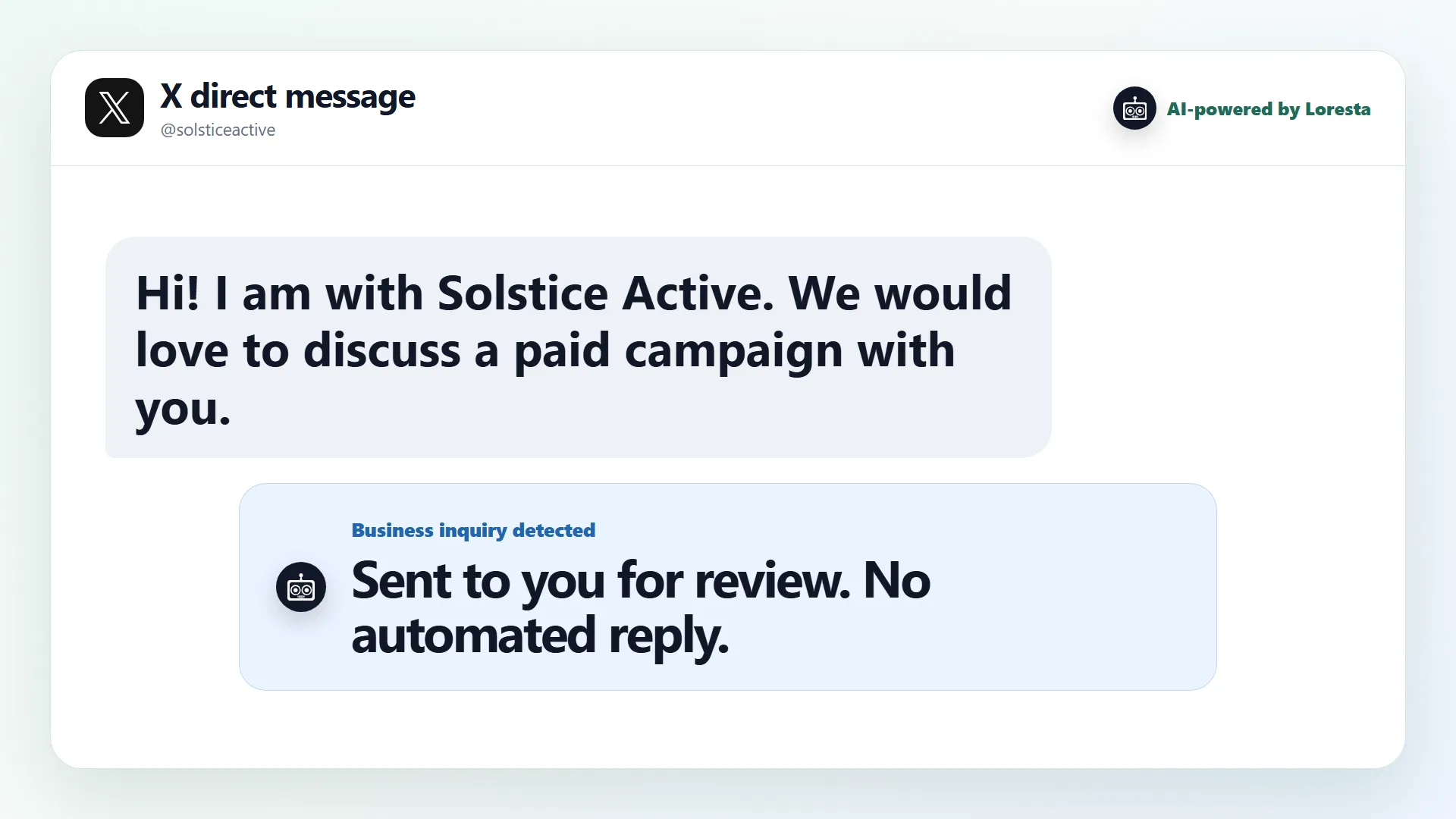
Brand deals, paid collaborations, payment issues, custom requests, disputes, legal or safety concerns, personal disclosures, and ambiguous high-value messages require a person. The correct automated action is often no reply plus a clear owner alert.
Route the original message, creator profile, provider, current thread, detected intent, and reason for handoff. Do not draft a negotiation or acknowledgment that could create expectations before the creator reviews it. The brand-deal DM playbook provides a separate intake process.
Assign one owner to Lane 4 during each operating window and review the oldest valuable exception first. Routine automation can reduce arrival-order pressure, but it should never bury a collaboration because easy fan questions keep appearing.
Track routine replies completed, qualified conversations, owner handoffs, oldest unresolved handoff, corrections, and blocked volume. If handoff age rises, change staffing or alerts. If correction rate rises, narrow the automatic intents. Use the DM time-saved calculator to estimate the routine workload separately.
Priority is not the same as automation
A collaboration or payment concern should reach the creator quickly with its context intact, not receive a generic acknowledgment.
Every incoming message should have one lane, one next action, and one owner.
Remove spam, abuse, scams, and prohibited requests from the working queue.
Answer only from approved facts, voice, and current-thread context.
Surface specific interest without adding pressure or invented offers.
Route business, payment, personal, safety, and uncertain messages untouched.
Use real examples from each creator profile to make every category operational.
Direct answers for creators and operators comparing DM automation.
Handle safety or urgent owner issues first, then valuable business and payment handoffs, then qualified interest. Routine questions can be processed consistently without hiding exceptions.
AI is best suited to repeated low-risk questions supported by approved facts and current-thread context. Uncertain, personal, commercial, payment, legal, and safety messages should return to a person.
Usually no. Responding can create noise, consume capacity, and encourage more unwanted contact. Use platform block, report, and archive controls where appropriate.
Specific offering questions, meaningful follow-ups, or a clear request for the approved next step are stronger signals than a greeting, emoji, or generic compliment.
Track useful routine replies, qualified conversations, handoff count, oldest unresolved handoff, correction reasons, blocked volume, and remaining reply capacity.
Loresta separates routine replies, qualified interest, owner handoffs, and blocked messages so the creator can focus on judgment instead of queue order.