
Trigger
Confirm the recipient initiated or clearly requested the DM interaction.

Current X rules explained
The safest creator workflow is narrow and inbound-first because technical ability to message someone is not the same as permission to automate the conversation.
Built from product rules for approved facts, platform permissions, conservative handoffs, and creator-controlled automation.
X's current automation rules say automated Direct Messages may be sent when the recipient requested or clearly indicated an intent to be contacted through DM. Someone sending your account a Direct Message is the clearest creator-inbox example.
Do not turn a follower list, public like, profile visit, or technical ability to receive DMs into a cold automated campaign. X specifically distinguishes being technically able to message a user from that user requesting or expecting an automated Direct Message.
X prohibits unsolicited Direct Messages sent in bulk or through automation. A creator assistant should answer the inbound conversation in front of it, not scrape accounts, start cold outreach, or broadcast the same destination to followers.
When a user-initiated interaction ends, X says not to send additional follow-up DMs unless the user gives permission. Build the system to respond to the active thread, stop when the question is answered, and avoid automated reminders that restart a quiet conversation.
X requires a clear and easy way to opt out of automated Direct Messages and says those requests must be honored promptly. Decide which phrases will stop automation, how that state is stored, and how a creator or operator can apply it manually.
An opt-out is broader than muting one suggested reply. The automation policy should stop future automated messages for that user while preserving the creator's ability to review the thread, block abuse, or respond personally when appropriate.
X warns automated DM operators to explain how personal information will be used and suggests linking a privacy policy where appropriate. Do not ask for passwords, payment details, identity documents, home addresses, or sensitive personal information in a routine automated reply.
Information received in a DM should not be exposed in a public post without explicit consent. Loresta keeps its intended automation on routine creator questions and hands payment, safety, legal, personal, and uncertain topics back to the owner. Review Loresta's security and data boundaries.
X states that account owners are ultimately responsible for activity performed by applications associated with their accounts. Before connecting a tool, understand its permissions, what can send automatically, how it uses conversation data, and how to revoke access.
AI-generated replies are not an exemption from the rules. Use approved facts, current-thread context, low-confidence handoffs, capacity ceilings, review logs, and a visible pause switch. The X setup guide turns these rules into a practical launch sequence.
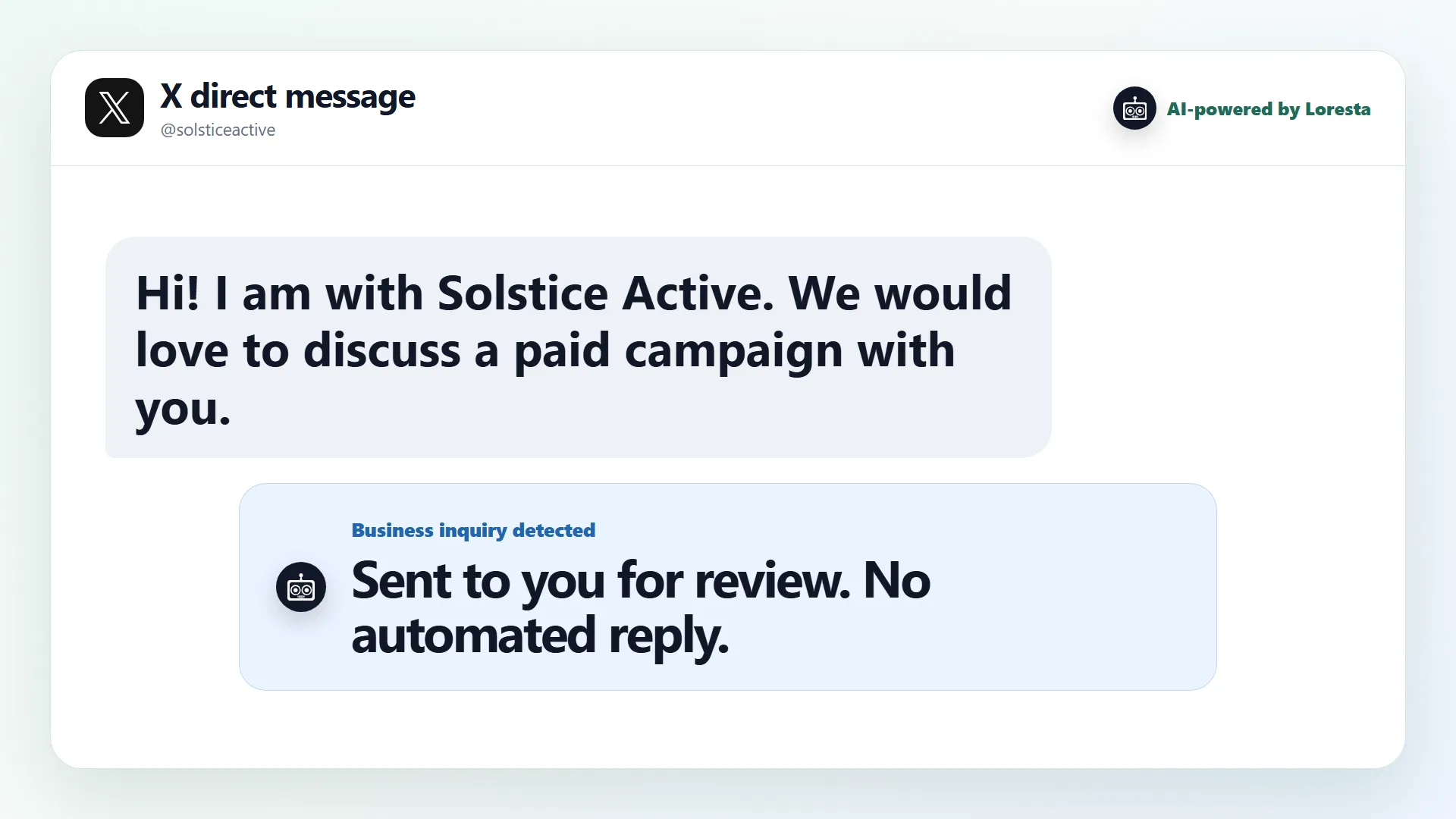
A safe no-send outcome
Loresta treats business, payment, custom, personal, and uncertain messages as creator work rather than opportunities to send more automation.
Review the trigger, content, stopping condition, and account controls for every automated behavior.
Confirm the recipient initiated or clearly requested the DM interaction.
Use only relevant approved information inside the active thread.
Honor opt-outs and do not restart an ended interaction without permission.
Keep logs, limits, pause, disconnect, and owner handoffs visible.
This operational checklist summarizes the official rule themes; it is not legal advice.
Direct answers for creators and operators comparing DM automation.
X permits certain automated DMs when the recipient requested or clearly indicated intent to be contacted, an easy opt-out is provided, and the activity follows X rules.
No. Following or being technically reachable does not necessarily mean a person requested an automated Direct Message. Unsolicited bulk automated DMs are prohibited.
AI can generate context-aware replies, but the resulting behavior still must follow X rules, respect user intent and opt-outs, and avoid spam or unsupported claims.
After a user-initiated interaction ends, X says additional follow-up DMs require permission. A reply assistant should not automatically restart quiet conversations.
X states that the account owner is ultimately responsible for actions taken through applications connected to the account.
Loresta uses inbound-first behavior, creator-approved information, conservative handoffs, and visible account controls for supported X conversations.