

Creator digital-product setup
Do creators need a website to sell digital products?
No. A creator can sell a first digital product through a hosted product page or checkout link, but the link must sit inside a complete sales and delivery workflow. Use this guide to decide when hosted tools are enough and when an owned website solves a real operating problem.
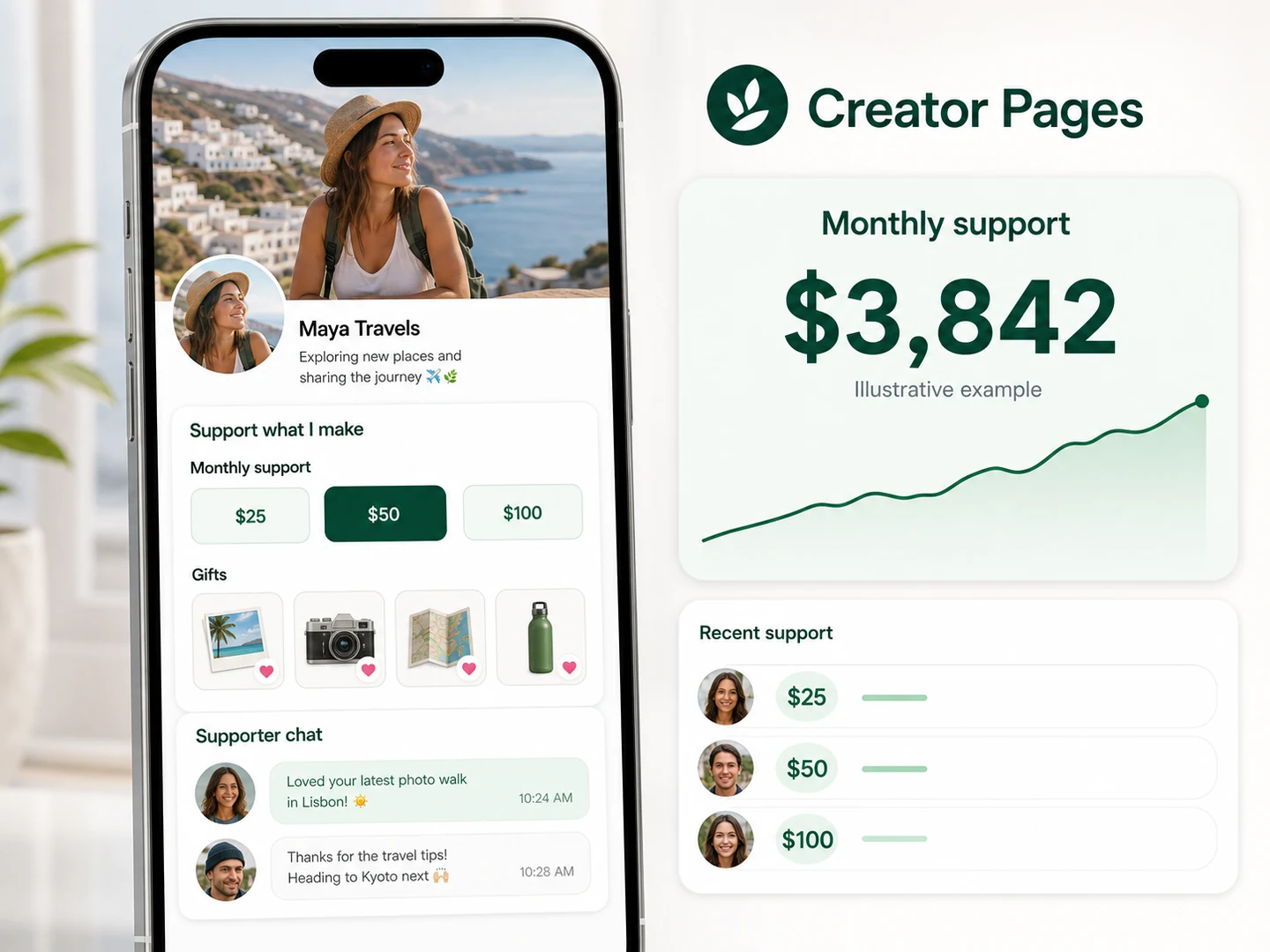
Choose the minimum sales stack, not the biggest site
A creator does not need a separately hosted website to sell every digital product. A hosted creator page, product page, marketplace listing, or payment link can be enough for a clear first offer. The minimum acceptable setup must still explain the product, collect payment safely, deliver what was promised, let the buyer recover access, provide support and terms, and leave usable records.
Stripe documents shareable Payment Links that can be sent through social media, email, or other channels. Gumroad documents a hosted creator profile that can introduce the creator and show products. Patreon documents one-time digital-product sales through a creator shop. Those examples prove that a separate site is not a technical prerequisite. They do not prove that any one option fits a particular product, country, audience, tax position, support burden, or desired control.
The reader decision is therefore: Which smallest stack can complete the buyer journey reliably, and what measurable gap would justify a full website? Start with one offer you can fulfill. Do not build pages to compensate for an unfinished product, unknown rights, unclear terms, or no support plan.
Test the six functions every option must cover
Give each function a pass, repair, or stop result. Pass means the actual configured path worked. Repair means one bounded change has an owner and deadline. Stop means a buyer could pay without receiving the promised outcome, the creator cannot operate the commitment, or a required rule or eligibility condition is unresolved.
| Function | Pass evidence | Stop condition |
|---|---|---|
| Offer | A first-time visitor can explain the file or access, fit, exclusions, price, license, and next step. | The page relies on invented outcomes, missing rights, or a product that is not ready. |
| Checkout | The supported payment path shows the correct seller, amount, currency, terms, and confirmation. | The creator cannot use the provider or the buyer sees a different promise. |
| Delivery | A test buyer receives the correct file or access automatically and can retrieve it later. | Payment succeeds while delivery depends on an unmonitored manual message. |
| Support | The receipt or page names a monitored route for missing access, product questions, and exceptions. | No one owns failed delivery, refunds, chargebacks, or inaccessible files. |
| Records | The creator can identify the order, product version, promised access, refund state, and applicable retention. | The only evidence is a social notification or private message. |
| Continuity | The creator knows what happens if a link, file, provider, account, or offer is changed or removed. | Past buyers lose access without warning or a supported recovery plan. |
Shopify’s Digital Products documentation illustrates why delivery is its own function: products can contain files or links, buyers can receive access at checkout and by email, and changing or deleting an asset can affect prior access. Gumroad’s customer journey documentation similarly describes receipt-based access and libraries. Compare the buyer’s later experience, not just how quickly the creator can publish a buy button.
Compare hosted, hybrid, and owned paths by the job
Use this matrix as a scope filter, not a platform ranking. Current features, eligibility, fees, taxes, payout methods, content rules, and geographic availability can change. Confirm them in the provider’s own documentation and the configured account before inviting buyers.
| Setup | Choose it when | What remains to verify | Upgrade signal |
|---|---|---|---|
| Hosted product or creator page | One or a few offers need description, checkout, delivery, receipts, and a support route. | Account eligibility, product rules, fees, tax role, access recovery, exports, and branding limits. | Several audiences cannot find the right offer or the provider cannot support the required journey. |
| Payment link plus separate delivery | The offer is simple and the creator has a dependable fulfillment and support system outside checkout. | How payment triggers delivery, how buyers regain access, and how refunds or version changes are handled. | Manual reconciliation or failed access consumes more time than a unified system would save. |
| Hosted page plus owned domain or hub | The creator needs a durable home and navigation while hosted tools continue to handle commerce. | Domain ownership, link monitoring, analytics, canonical destinations, and which provider owns each record. | Custom paths, integrations, search content, or portability become central to the business. |
| Full website or ecommerce build | Multiple offers, content, audience paths, integrations, or owned presentation justify ongoing maintenance. | Checkout and delivery architecture, security, accessibility, privacy, tax, support, backups, and update ownership. | Only after the added control solves a documented problem and the creator can maintain it. |
A full website adds possibilities and responsibilities. It can organize an offer library, support search discovery, present richer proof, and reduce dependence on one public profile. It can also create more configuration, maintenance, security, privacy, accessibility, and integration work. “Professional” is not an acceptance criterion. Name the buyer problem the site will solve and the recurring work it creates.
When several platform candidates pass the six functions, use the workflow-fit matrix and current fee comparison. Do not choose on a headline percentage before verifying fulfillment and support.
Work through a first drawing-guide launch
Consider a fictional illustrator with a finished 38-page drawing guide, a clear personal-use license, and an audience that repeatedly asks for the process. The creator has no website and can protect two hours a week for buyer support. The product does not need accounts, streaming, a community, custom feedback, or recurring content.
A hosted product page passes the offer test after the creator adds a sample spread, file format, accessibility note, license boundary, refund terms, and contact route. A test purchase confirms the correct amount, receipt, file, and later access. The creator records the product version and support owner. This stack covers the first sale without a separate website.
After eight weeks, suppose buyers repeatedly ask for three related tutorials and cannot tell which one fits. The creator now has a measured navigation problem. A small owned hub that compares the guides and links to the existing hosted checkouts may be enough. A full ecommerce rebuild still is not justified unless custom bundles, accounts, search content, or integrations create a clearer gain than the extra maintenance.
Hosted page passes
One product, automated access, clear support, and recoverable records fit the current workload.
Owned hub may help
Several offers create a real discovery problem, while hosted checkout and delivery still work.
Full build needs evidence
Custom commerce belongs only after required journeys exceed the hosted stack and maintenance has an owner.
Run a complete-path pilot before sending traffic
- Freeze one product version. Record the exact file, description, price, license, terms, support route, and date checked.
- Use the provider’s supported test or preview path. Do not create fake public orders or assume a product editor matches the buyer view.
- Test as a buyer. Inspect the mobile page, checkout information, confirmation, receipt, download or access, and recovery route.
- Create two exceptions. Recheck the path for a missing receipt and a refund or file-replacement request without exposing another buyer’s information.
- Measure the operating burden. Record failed deliveries, support minutes, refunds, product questions, and manual reconciliation separately from views or gross sales.
- Choose continue, repair, add a hub, or rebuild. Expand only when a specific failed function or buyer question warrants more architecture.
If a social conversation starts the journey, use the DM-to-delivery guide to keep unsolicited promotion, invented urgency, and unsupported promises out of the reply. The FTC’s small-business advertising guidance still applies to the offer claims regardless of whether the destination is a marketplace page, payment link, creator Page, or custom site.
The final decision should fit in one sentence: “We will sell this product through this verified hosted path because all six functions pass, and we will consider an owned hub only if navigation or discoverability becomes a measured constraint.” That is a stronger foundation than building a large website before the first complete buyer journey works.
Research notes
Sources checked for this guide
Product details and policies can change. First-party pages were checked on September 8, 2026.
- Stripe: create Payment Links
Shareable hosted payment pages for products, subscriptions, tips, or donations, including links that can be used without a separate website.
- Shopify: Digital Products
Product assets, checkout download links, email access, order management, and the effect of replacing or deleting files.
- Gumroad: customer purchase journey
Account-optional purchases, receipt-based access, email identity, test purchases, and customer libraries.
- Gumroad: profile and standalone pages
A hosted profile can introduce a creator, display products, collect followers, and link to product pages without a separately hosted website.
- Patreon: selling one-time purchases
Current first-party guidance for listing digital work as one-time purchases through a creator shop.
- FTC: Advertising FAQs
Truthful advertising, support for objective claims, clear disclosures, and responsibilities that apply regardless of the page or checkout provider.
Questions creators ask next
Direct answers that keep the plan realistic.
Can a creator sell a PDF without a website?
Yes. A hosted product page or payment link can collect payment without a separately built website, but payment alone is not the full workflow. Verify product description, checkout, delivery, receipt, later access, support, refund terms, records, and tax responsibilities before sharing the link.
Is a link-in-bio page enough for digital products?
It can be an entry point when every product link leads to a complete, trustworthy purchase and delivery path. A list of links is not enough when buyers cannot understand the offer, recover access, find terms, or get support.
When should a creator build a full website?
Build one when owned navigation, several audience paths, durable search discovery, custom presentation, deeper integrations, or provider independence solve a measured problem. Do not build it only because a hosted page feels less professional.
Should a creator use Stripe Payment Links for downloads?
A Payment Link can provide a hosted payment page, but the creator must verify how the actual file, receipt, later access, support, tax, and refund workflow will work. Do not treat successful payment as proof of successful fulfillment.
Can Loresta replace a full ecommerce website?
Loresta should be evaluated against the specific offer, checkout, delivery, supporter-access, records, and conversation requirements. Use one approved offer and a complete-path test rather than assuming any creator page replaces every ecommerce or content need.
Test one approved offer from interest to access
Compare Loresta’s creator Page, offer, supporter context, and approved conversation workflow with the complete path your product requires.